Our Biodiversity Guide: Observing Nature at the Villa du Verger
Welcome to the garden of Villa du Verger. Here, we live alongside a thriving wildlife population. During your stay, keep your eyes peeled—you’re sure to come across...
All the photos were taken with my smartphone (a Google Pixel 9a), mostly in the orchard and some during walks with our dog Looping in Valergues or the Valergues Forest. In the orchard, there are no pesticides; there are untouched areas with tall grasses, and year after year, nature takes hold and teems with a variety of species. Biodiversity is naturally reclaiming its place.
Honeybee from beehives
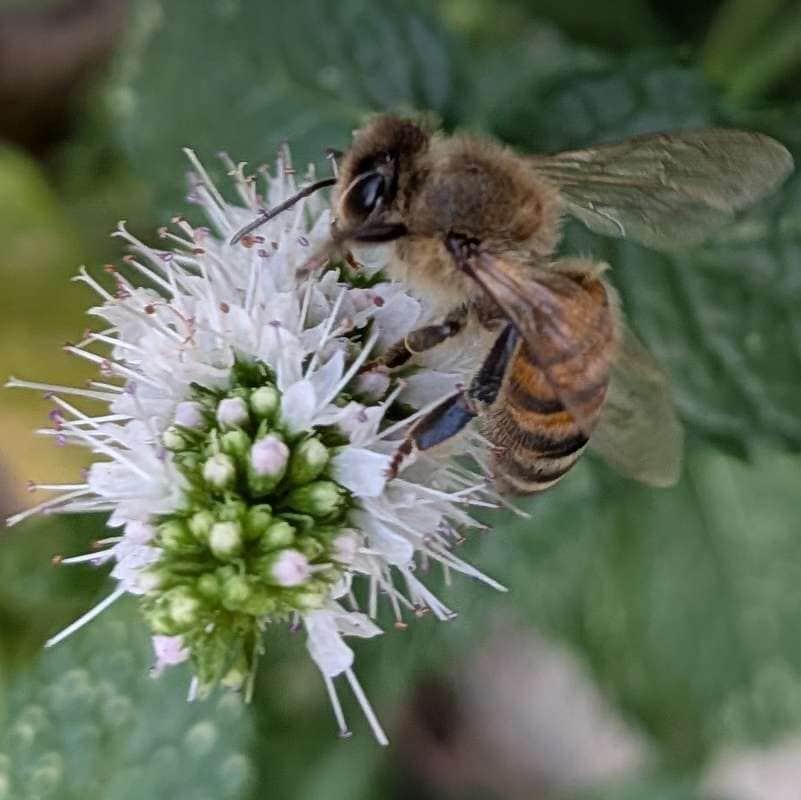
Honeybee (or European honeybee, Apis mellifera)
Also known as the European honeybee, this bee is gathering nectar and pollen from a peppermint flower cluster. Bees love the small flowers of the Lamiaceae family, especially in the middle of summer!
Solitary wild bee
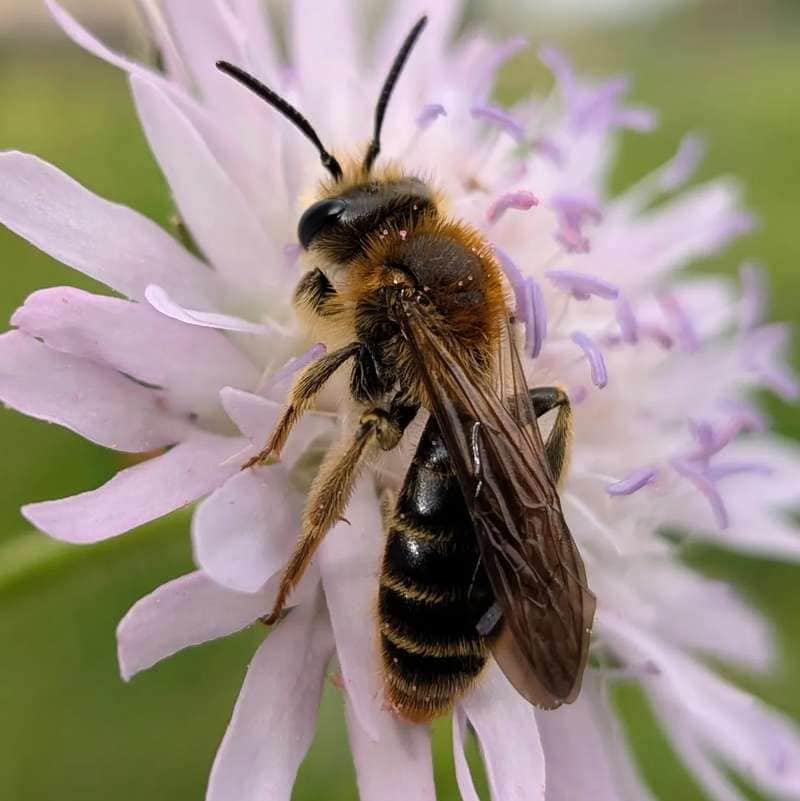
Scabious Andrena (Andrena hattorfiana)
This is a solitary wild bee, perched on a scabious flower. They usually dig their nests directly into sandy soil or hard-packed earth.
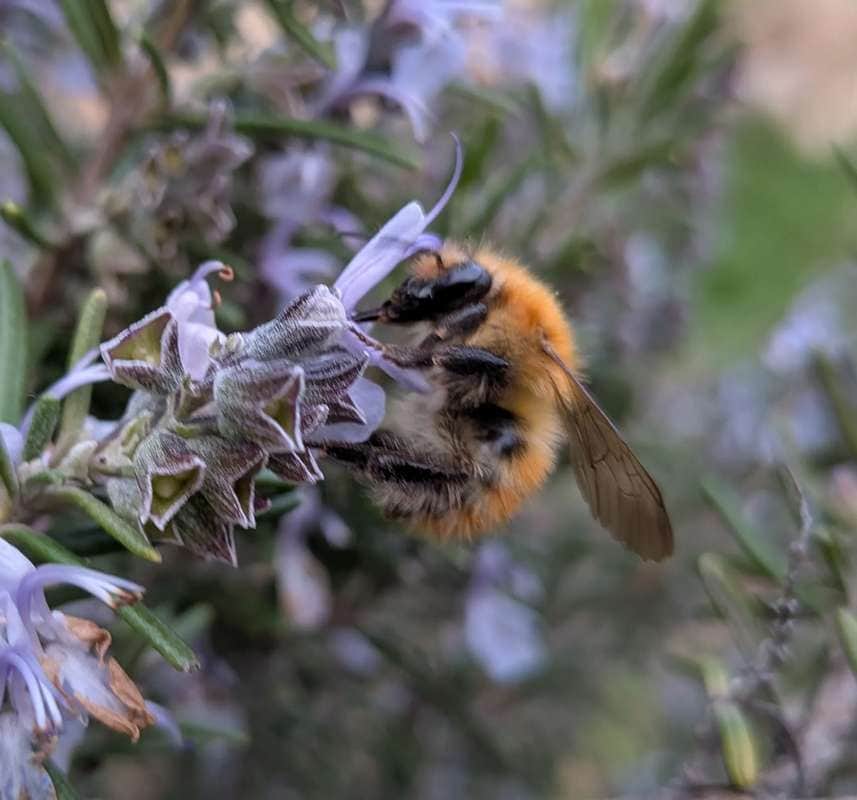
The red-headed mason bee (Osmia bicornis) or a field bumblebee (Bombus pascuorum)
They love rosemary at this time of year and are covered in this soft reddish hue all over their bodies.
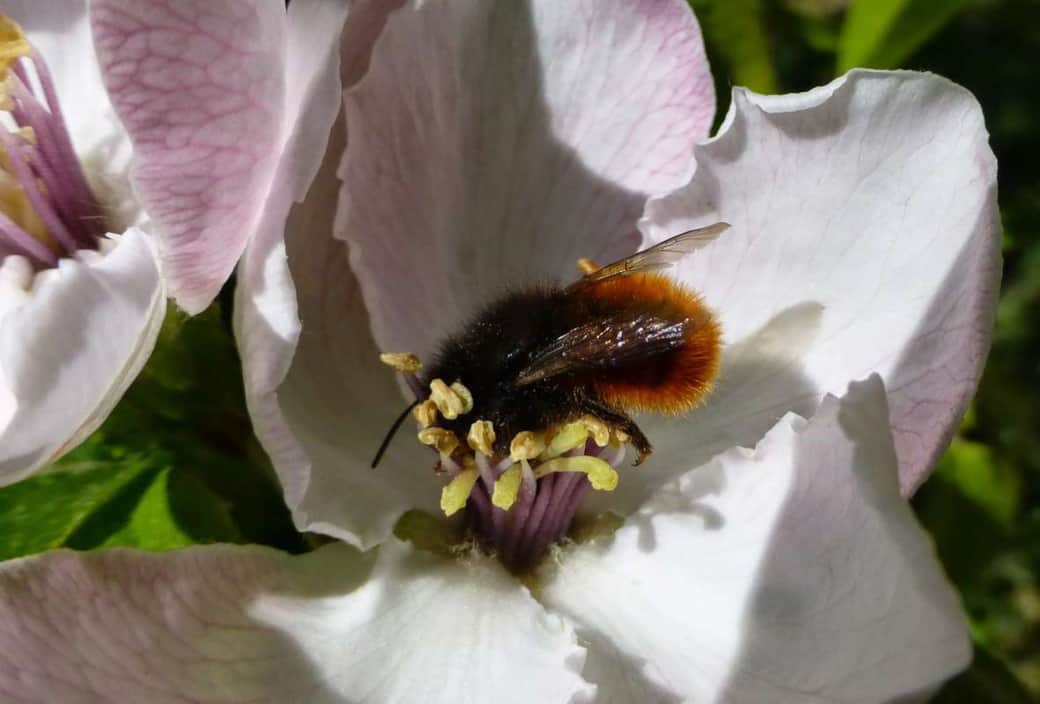
Reddish-legged Anthophora (Anthophora plumipes)
It is an excellent pollinator that can be seen as early as the beginning of spring on the first flowers, as shown here on a quince blossom.
Bombus
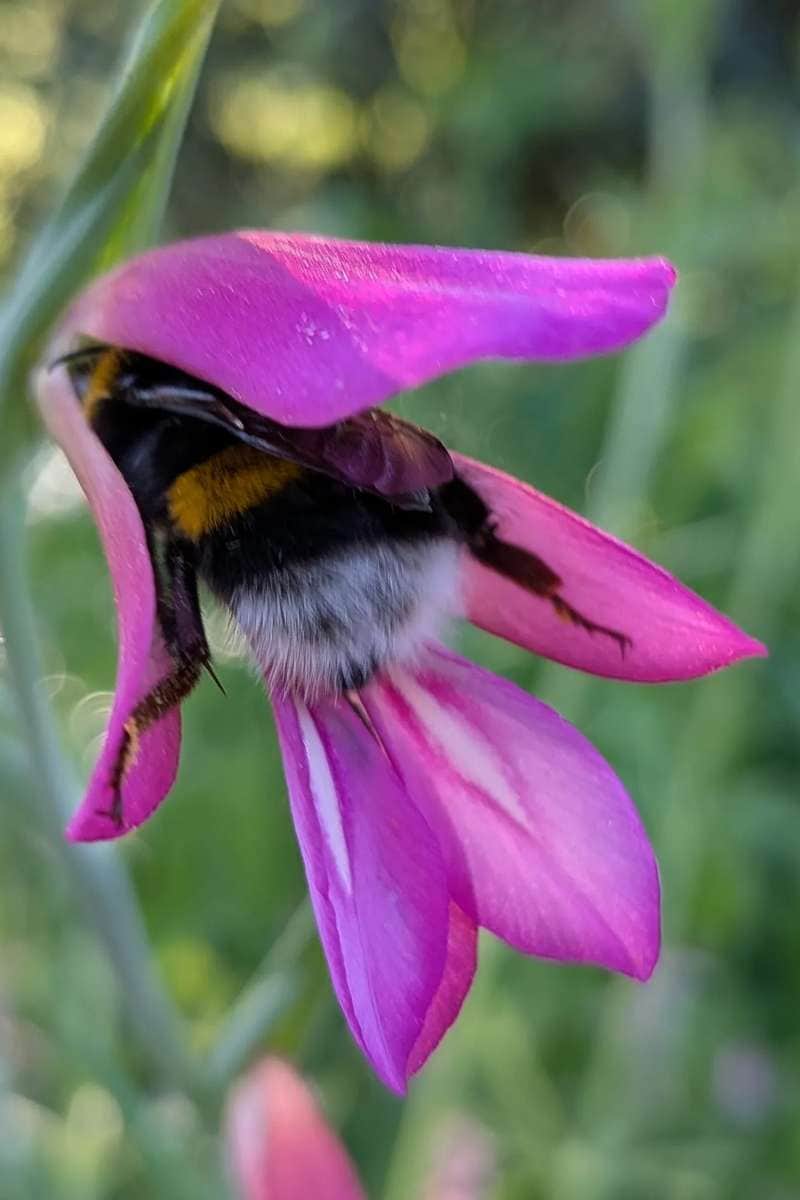
Bumblebee (genus Bombus)
In the middle of contorting itself inside a wild gladiolus flower. Bumblebees love this kind of long-tubed flower. They fly right inside to reach the nectar at the very bottom, brushing against the stamens along the way to load up on pollen.
Wasp
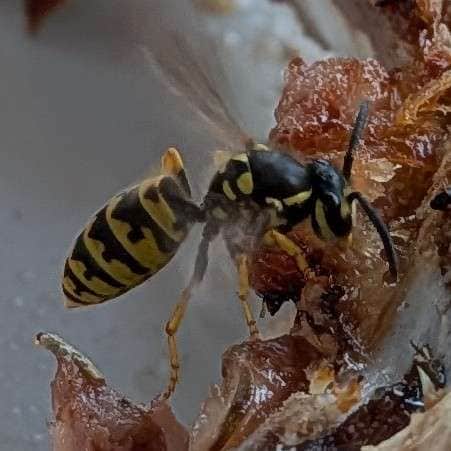
Gallic polist wasp (Polistes dominula)
Unlike German wasps, paper wasps are generally quite peaceful as long as you don't get too close to their paper nest (which, incidentally, hangs in the air and has no protective covering).
Lepidoptera / Butterfly
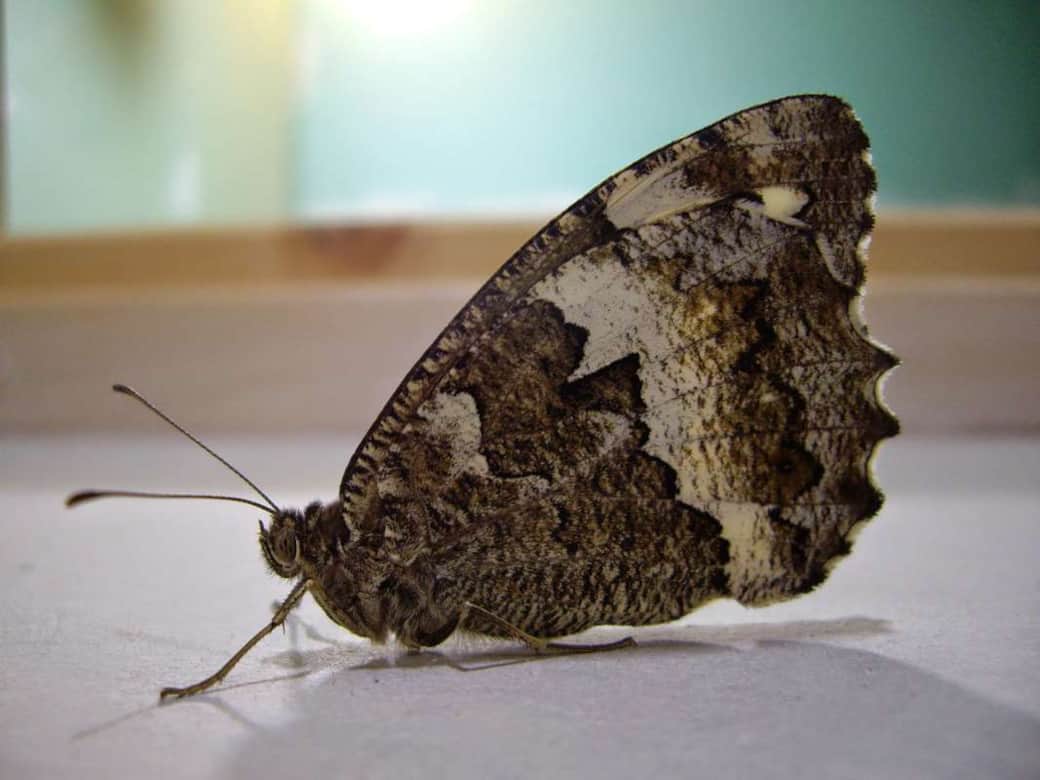
Day butterfly of the genus Hipparchia
Although it has dull colors reminiscent of moths (Heterocera), it is in fact a butterfly (Rhopalocera). It is most commonly seen in the summer, flitting close to the ground or perching on tree trunks in clearings and along forest edges.
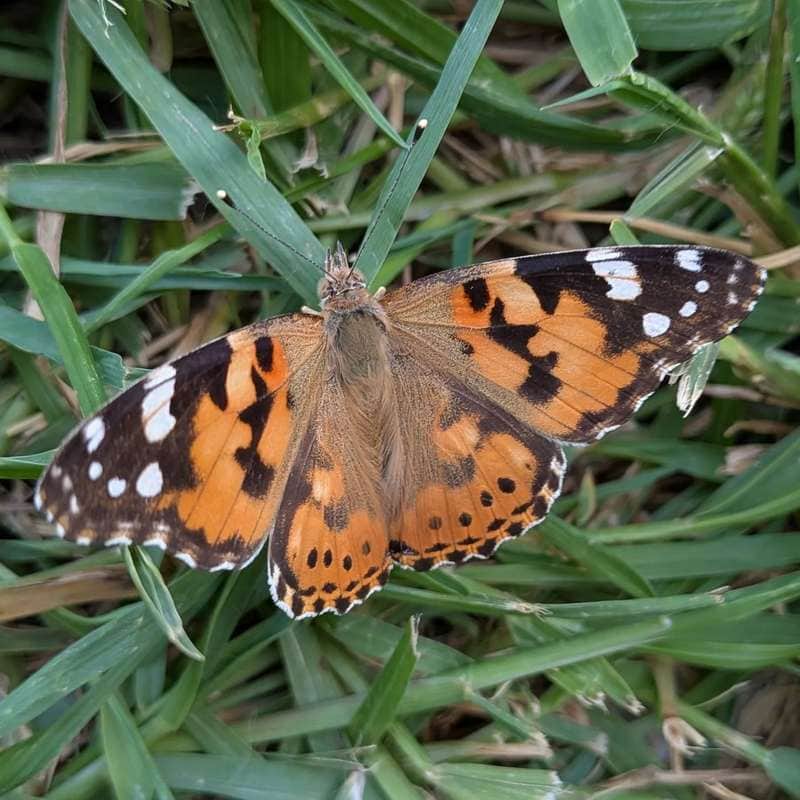
Painted Lady (also known as the Thistle Butterfly; scientific name: Vanessa cardui)
The Ladybird Moth is an exceptional migratory butterfly. Every year, successive generations travel thousands of kilometers from sub-Saharan Africa to northern Europe. This specimen, photographed in June, likely originated from the migration waves that began in the spring in Europe or North Africa..
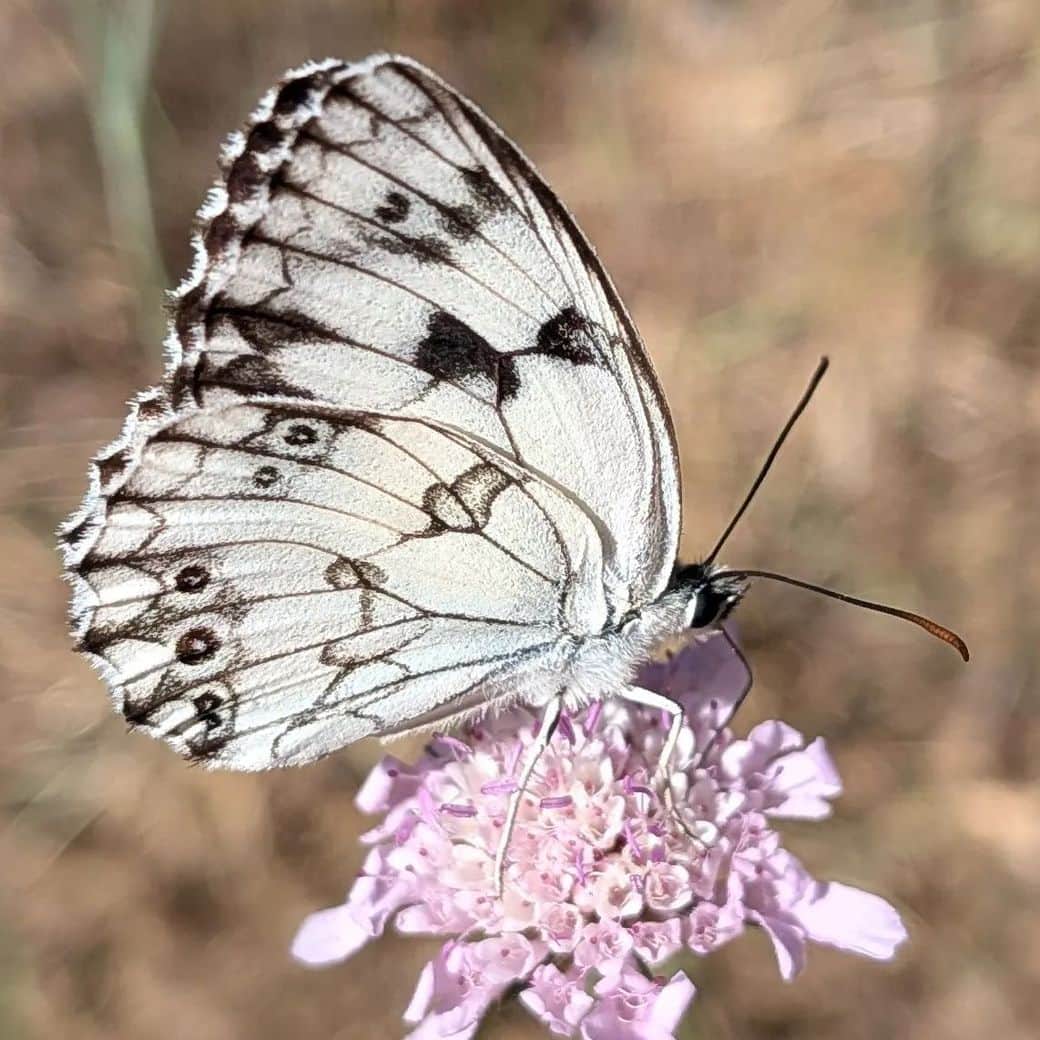
Half-mourning (Melanargia galathea)
This tireless butterfly spends its days flitting above the tall grass. The sharpness of the photo really lets you appreciate the delicacy of its scales.
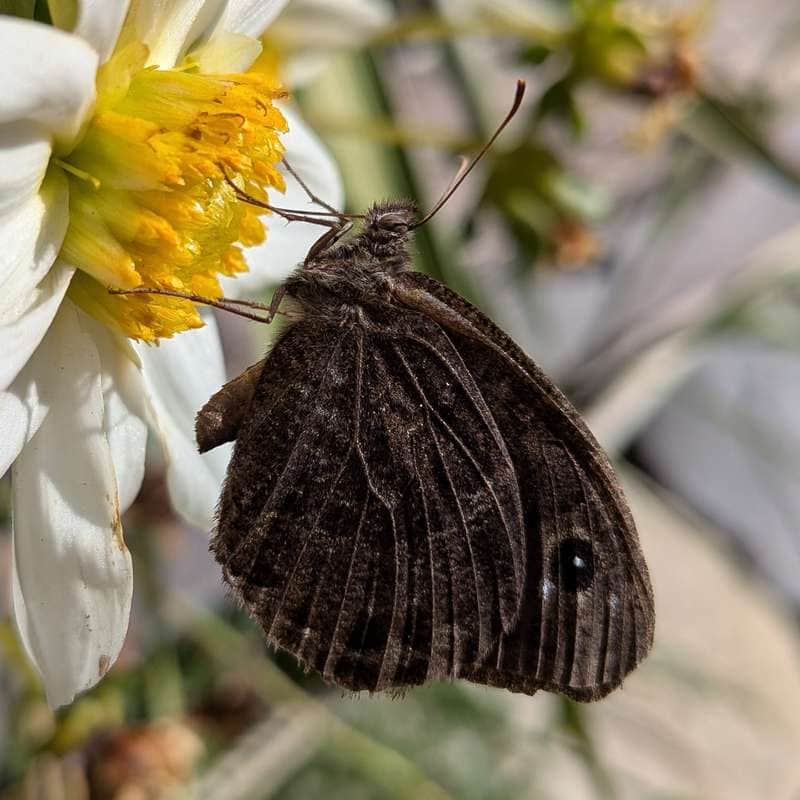
Le Myrtil (Maniola jurtina)
Un champion de la sobriété environnementale : contrairement à d'autres papillons exigeants, sa chenille se nourrit de graminées très communes (pâturin, houlque, fétuque). C'est la preuve vivante qu'il n'y a pas besoin de plantes exotiques ou rares pour maintenir une biodiversité riche : de l'herbe haute suffit.
L'ami du jardinier écoresponsable : son abondance dépend directement des pratiques de gestion paysagère. Un espace qui pratique la fauche tardive ou réserve de zones d'herbes folles verra ses populations de Myrtils exploser, offrant une observation concrète de l'impact positif du « laisser-faire » au jardin.
Un bouclier visuel fascinant : l'ocelle (le « faux œil » noir à point blanc) situé à l'extrémité de l'aile sert d'appareil de leurre. Un oiseau prédateur aura tendance à attaquer ce faux œil plutôt que le corps vulnérable du papillon, lui permettant de s'échapper avec juste un bout d'aile en moins.
Un baromètre de la santé des sols et des prairies : sensible aux insecticides et à la fauche systématique avant la ponte, sa présence régulière indique une prairie sainement gérée et exempte de produits chimiques.
Thermorégulation astucieuse : vous le verrez très souvent posé ailes fermées en plein soleil, orienté de manière à maximiser ou minimiser l'exposition de ses ailes sombres selon la température ambiante.
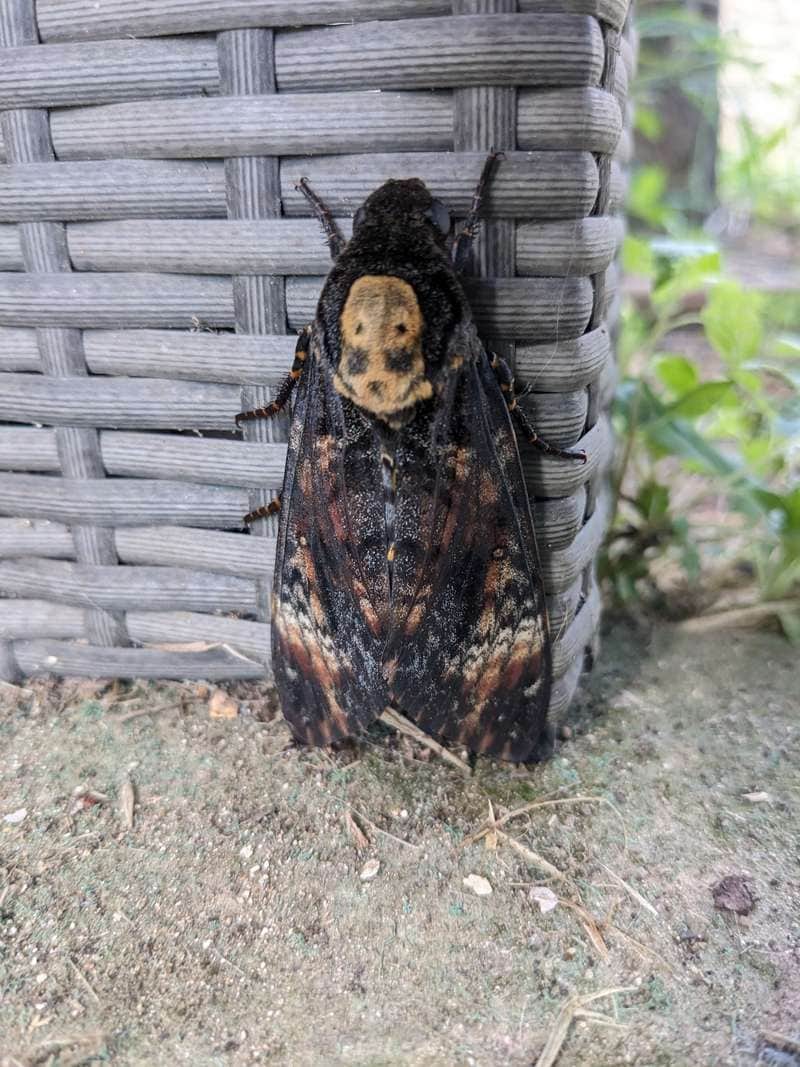
Skull-headed Sphinx (Acherontia atropos)
One morning, I had the extraordinary good fortune to come across an absolute rarity and one of Europe’s most legendary insects! It was the famous Skull Sphinx (approx. 6.5 cm), resting peacefully on the patio furniture. It is a giant moth of the Sphingidae family.Here’s why this insect has fascinated and impressed people for centuries:
- The skull on its back: You can’t miss it! The yellow-beige pattern on its thorax strikingly resembles a human skull, complete with eye sockets and a jaw. It is this unique, macabre pattern that earned it its name and an unfair reputation as a harbinger of bad luck in ancient folklore.
- A colossus built for travel: It is a massive migratory butterfly. It arrives from Africa in the spring to breed in Europe. Its dark, mottled forewings provide perfect camouflage when it remains motionless against tree bark or, as seen here, on gray, braided resin.
- The hive raider: This butterfly has a weakness: honey. It is capable of entering bee hives directly. To avoid being attacked, it uses a two-pronged strategy: it emits a cuticular scent that mimics that of bees to go unnoticed, and it has a very short, rigid proboscis capable of piercing the wax cells to feast on nectar.
When it feels threatened, it may let out a little cry! The skull-headed sphinx is one of the few butterflies capable of producing a very audible high-pitched whistle or squeak by expelling air through its proboscis.
The rose chafer
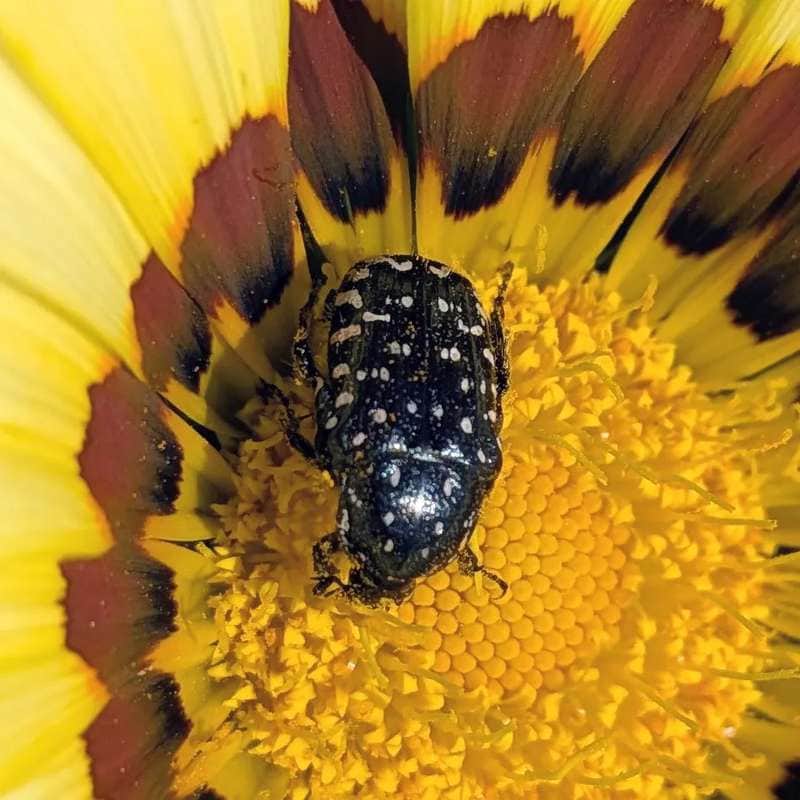
Gray rose chafer (also known as the "fateful rose chafer," scientific name Oxythyrea funesta)
She loves to gorge herself on pollen and nectar. She is often found, as here, nestled deep within large, open flowers (in this case, a Gazania).
While she’s a good pollinator, she can be a bit rough at times and tends to nibble on the reproductive parts of flowers (the stamens and pistils), or even the petals, which can sometimes annoy gardeners (especially on roses or fruit trees).
Its larvae, on the other hand, love compost and leaf mold, where they actively help break down organic matter, just like their cousins, the large golden rose chafer beetles
Diptera (the order of flies)
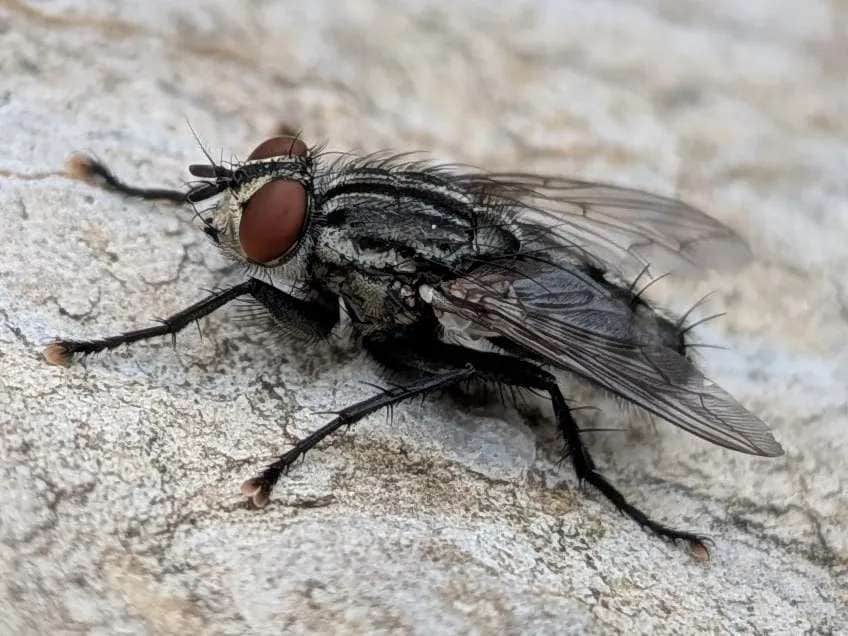
Mouche à damier (souvent appelée aussi Mouche grise de la viande, du genre Sarcophaga)
Contrairement aux mouches domestiques classiques, les femelles de cette famille ont la particularité d'être ovovivipares : elles ne pondent pas des œufs, mais directement des petites larves mobiles sur les matières en décomposition. Dans la nature, elles jouent un rôle crucial de "nettoyeuses" de l'écosystème !
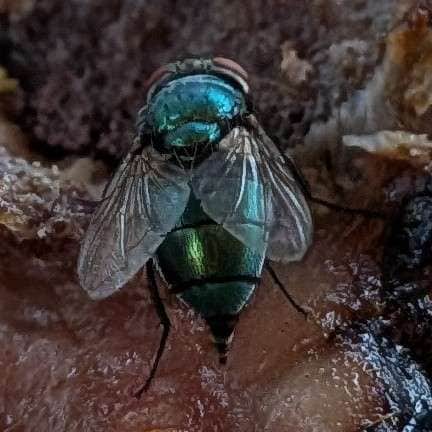
Green fly (often called the "meat fly")
Family Calliphoridae, and most likely of the genus Lucilia (such as Lucilia caesar or Lucilia sericata). Less poetic than bumblebees, but the sheen of its exoskeleton is still fascinating to observe up close!
Hémiptères (les punaises)
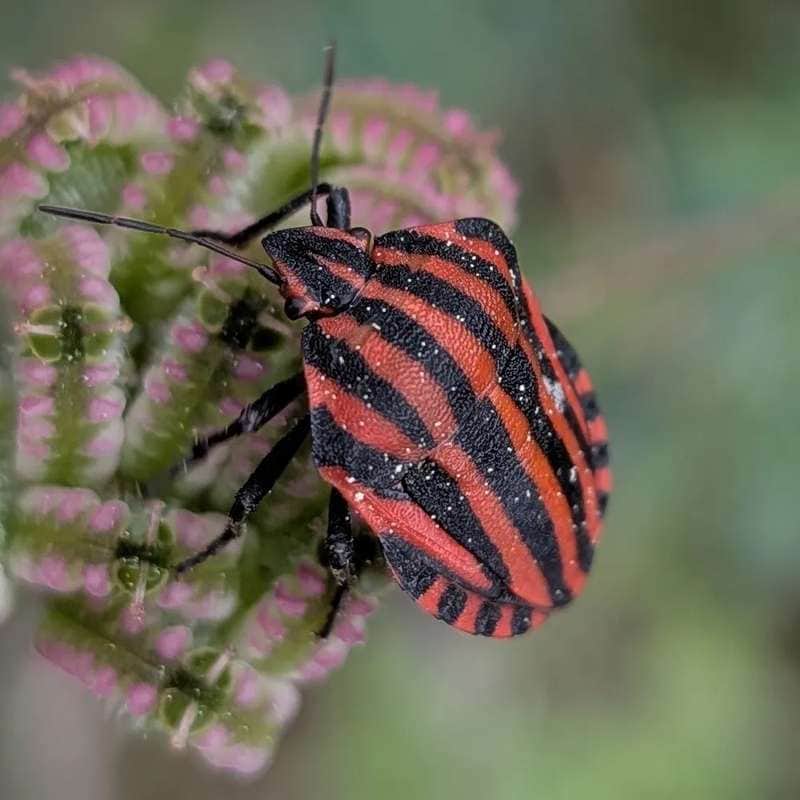
Italian graphosome (Graphosoma italicum), more poetically known as the harlequin bug
It’s the undisputed star of the vegetable garden and the garrigue. It’s almost always found on the umbels of plants in the Apiaceae family (umbellifers such as wild fennel, wild carrot, or, as seen here, parsley/cilantro in bud). It loves to settle there in full sun in late spring to suck the sap and developing seeds using its proboscis. The contrast between its geometric red-and-black armor and the very soft pink of the plant beneath is magnificent!
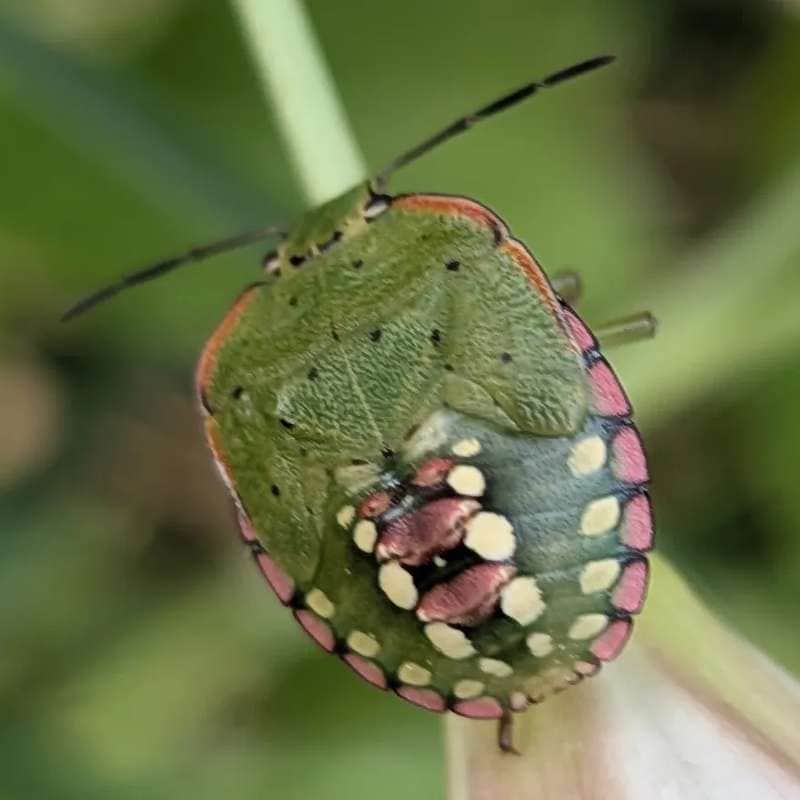
Nymph (in the final stage of development) of the Spotted Green Stink Bug (Nezara viridula)
Native to tropical regions but now well established in the south of France, it loves the June sunshine. It uses its proboscis to pierce plants and feed on their sap. In the vegetable garden, it’s particularly fond of tomatoes and eggplants!
Orthoptères
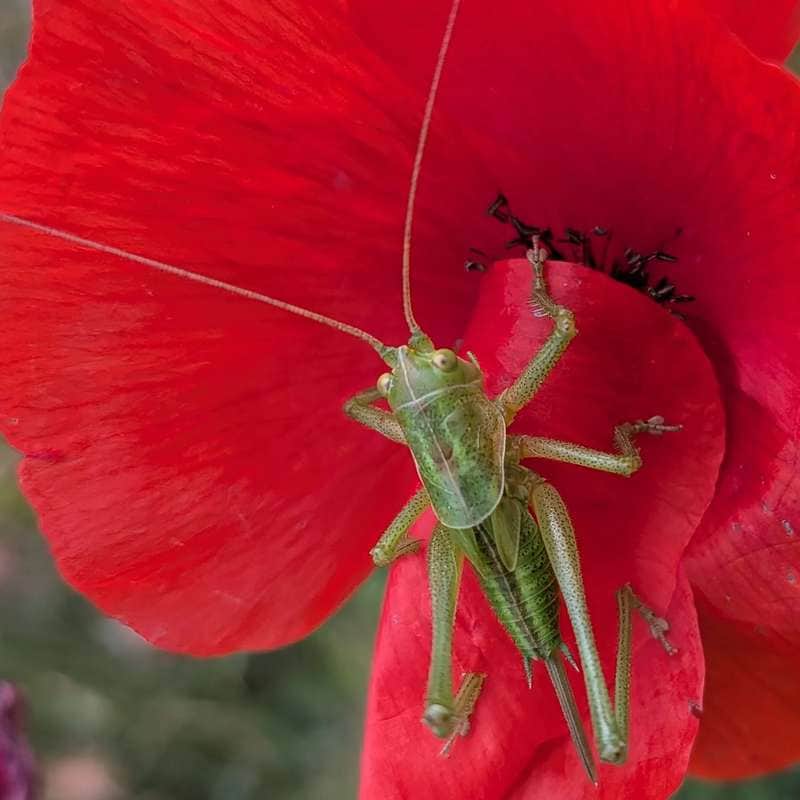
Nymphs of the Great Green Grasshopper (Tettigonia viridissima)
In the summer, once they’ve grown up and learned to fly, they’ll be the ones livening up your evenings with their constant, very loud chirping from the tops of the bushes!
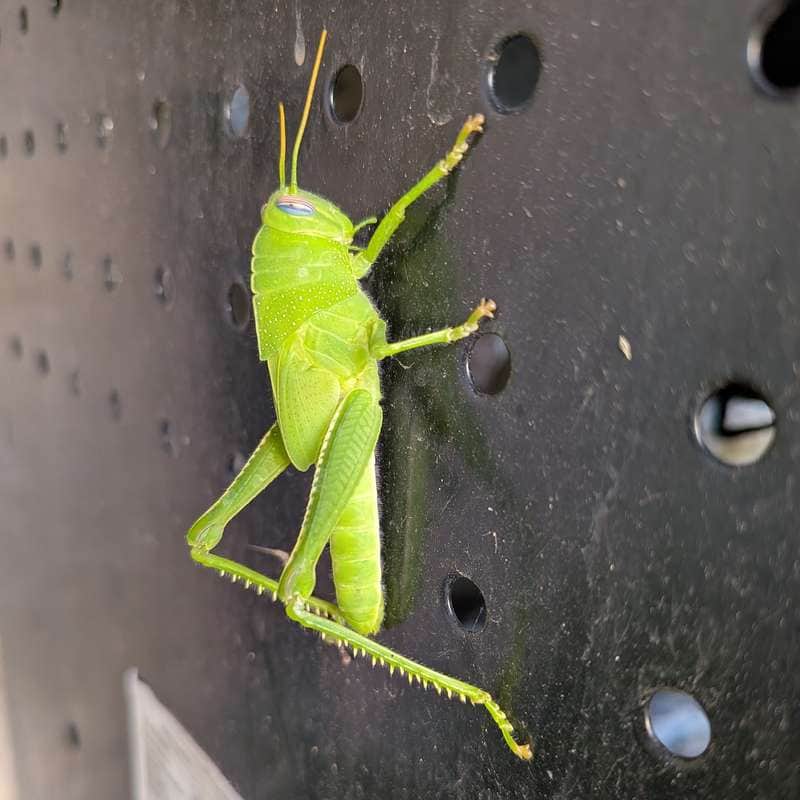
Egyptian Youth Cricket
Color variation: While the adult is generally gray-brown or yellowish to blend in with rocks and bark, the larva is a very bright apple green (it can also be yellowish or brown depending on the environment). Here it is shown on the black barbecue.
Wing development: At this stage, the wings have not yet formed. Only small wing sheaths are visible on the back.
Key identification characteristics:
- The vertically striated eyes are already clearly visible, even in juveniles.
- The orange-yellow antennae, which will darken in adulthood.
- The small golden keel on the thorax, bordered by tiny white dots.
Behavior: It is commonly seen in summer (especially in July and August), foraging through vegetation before undergoing its final molt to become an adult capable of overwintering.
Unlike most grasshoppers and locusts in our region, which overwinter as eggs and hatch in the spring, the Egyptian locust overwinters as an adult.
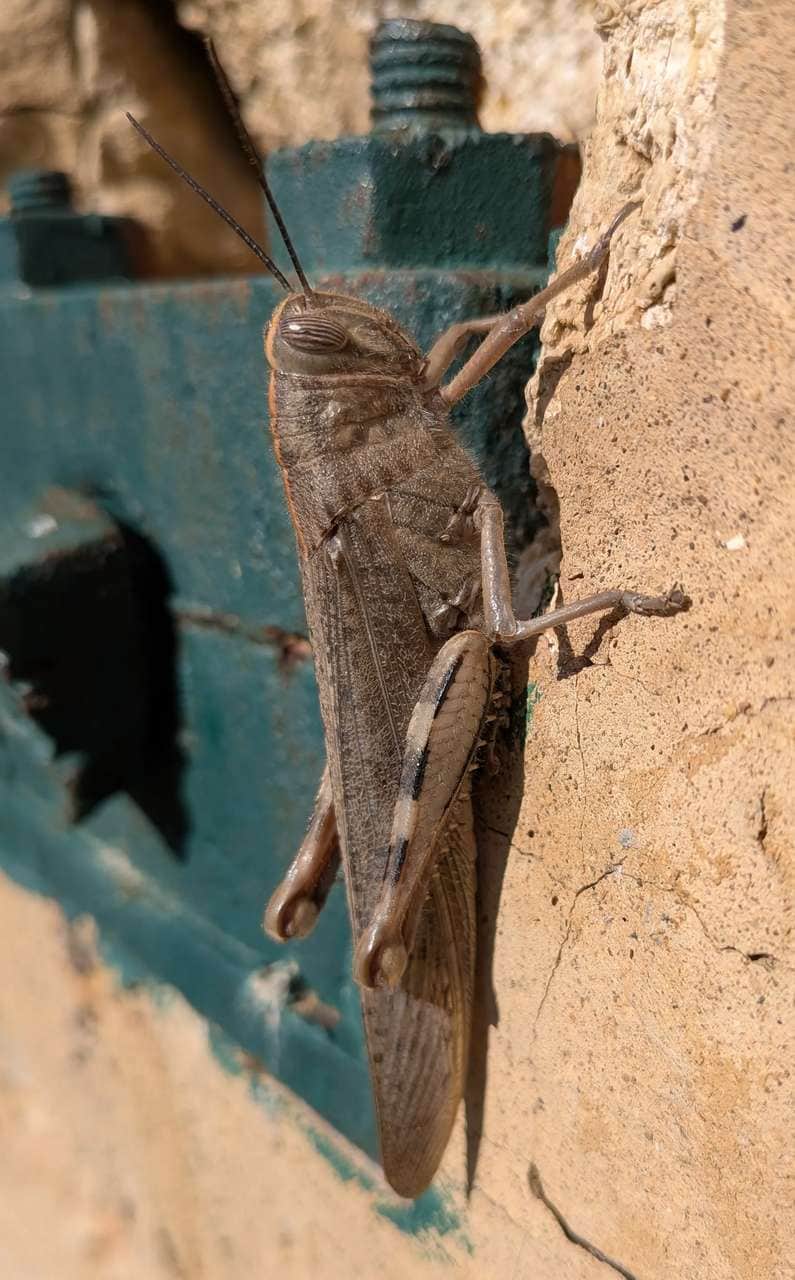
Egyptian Locust (Anacridium aegyptium)
It is one of the largest species of grasshoppers you might encounter in France (particularly in the south).
Unlike most grasshoppers and locusts in our region, which spend the winter as eggs and hatch in the spring, the Egyptian grasshopper spends the winter as an adult.
As soon as the first warm days of March and April arrive, it emerges from its torpor and loves to press itself against sunny walls (as seen here on the stucco and this wrought-ironwork) to soak up heat. Completely harmless and solitary, it bears no resemblance to the locust plagues of Africa
Cicada
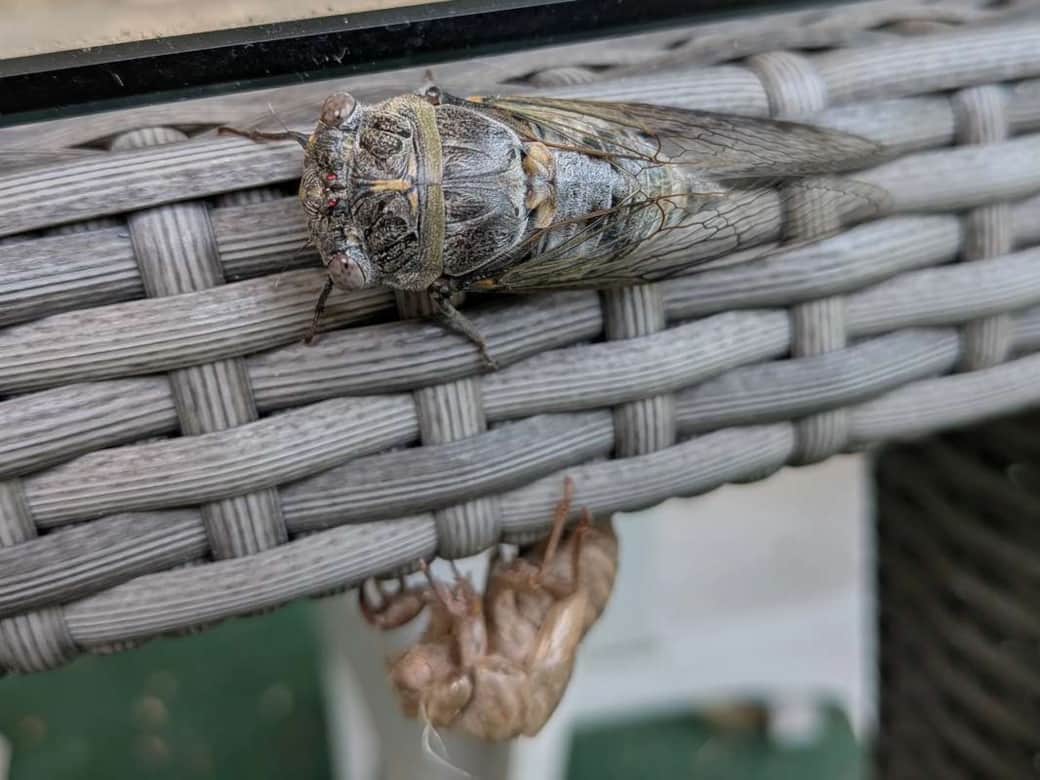
Gray cicada (Cicada orni), also known as the Orne cicada
The large cicada pictured above has just completed its transformation. It now sports its adult form, with stunning translucent wings featuring very pronounced veins and large, bulging eyes. You can even make out three small, shiny red dots on its forehead, between its two large eyes: these are its ocelli (simple eyes that help it detect changes in light).The exuvia just below: The empty brown “shell” hanging below is its former nymphal casing, called an exuvia. This nymph spent several years underground feeding on root sap before emerging into the open air in mid-June. It climbed onto the garden furniture, anchored itself securely, and then its shell split open along its back to release the winged cicada you see above.
Formicidae
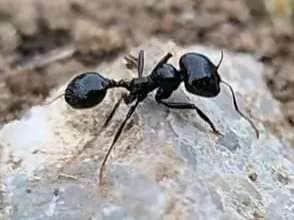
A worker ant of the Messor genus, most likely the famous harvester ant (Messor barbarus or Messor capitatus)
These are seed-eating ants. They collect grass seeds, bring them back to the nest, have the Major workers husk them, and then grind them into "ant bread," which the colony eats.
Dragonflies
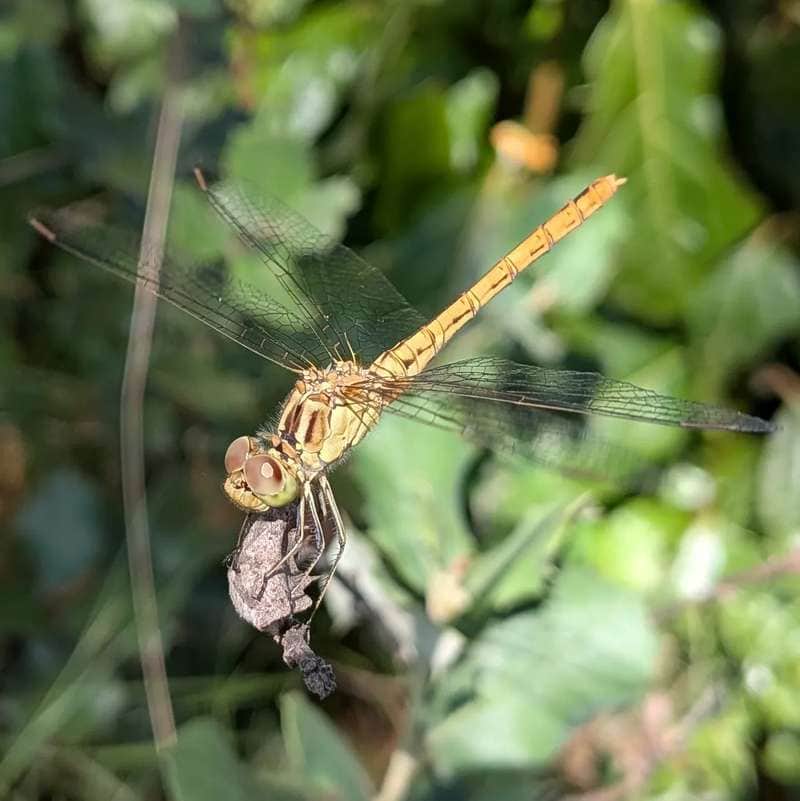
Sympetrum (commonly known as "Sympetrums" or "Darters" in English)
This is a very common group of medium-sized dragonflies. They are very active near bodies of water, but also in gardens and sunny areas.
Ladybug
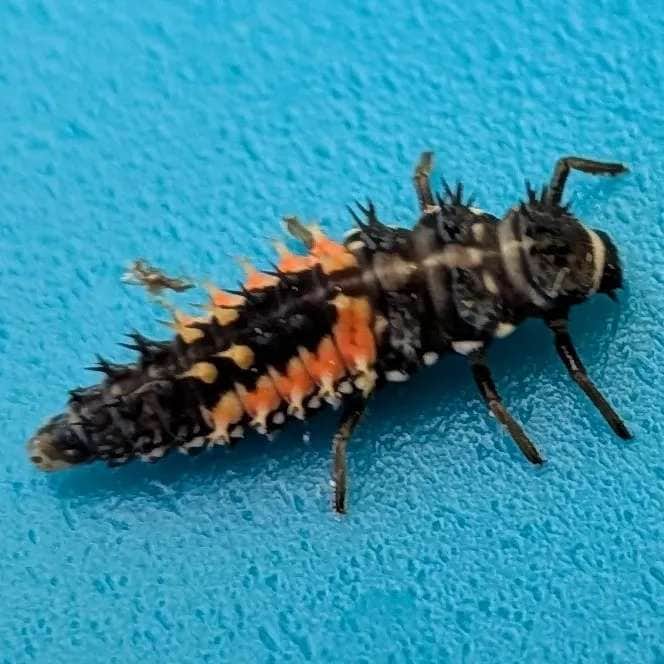
Larva of the Seven-spotted Ladybug (Coccinella septempunctata)
This is the "teenage" (and voracious) version of the seven-spotted ladybug
A voracious eater: While the adult eats a lot of aphids, this larva is a veritable ogre in the midst of growing. It spends its days scouring the stems in search of aphid colonies, capable of devouring dozens of them a day all by itself.Before long, it will stop moving, transform into a chrysalis, and finally emerge as a small red beetle with black spots.
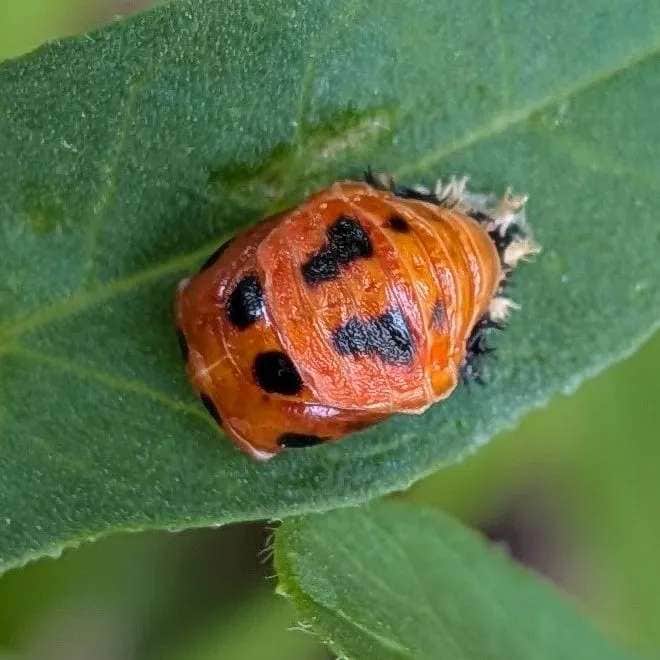
Ladybug nymph (or chrysalis)
Beneath this small orange dome speckled with black, the insect is literally liquefying and reorganizing itself to form the wings, legs, and elytra of the adult.In a few days, this shell will open to let the adult ladybug emerge (which, incidentally, will be completely yellow and soft for the first few hours, until its shell hardens and takes on its final colors).
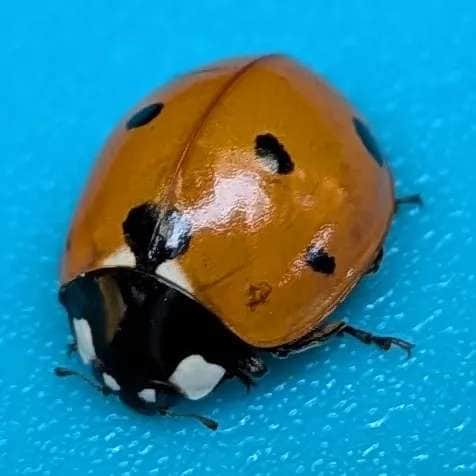
Seven-spotted ladybug (Coccinella septempunctata)
This is the most common and iconic species of ladybug in Europe. It is a voracious predator of aphids, both as a larva and as an adult (it can devour up to a hundred aphids a day). It’s the best natural insecticide you can have in your garden!
Beetle
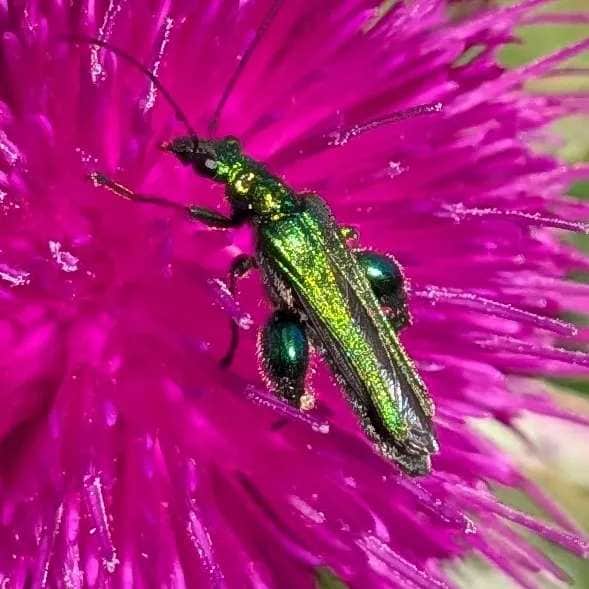
Male beetle of the noble water beetle (Oedemera nobilis)
Some people affectionately call it the “frog-leg” insect. It is a big fan of pollen and nectar. In the spring, it loves to settle on large, colorful flowers (thistles, daisies, umbel flowers) to feed, bask in the sun, and look for a mate.
Gecko
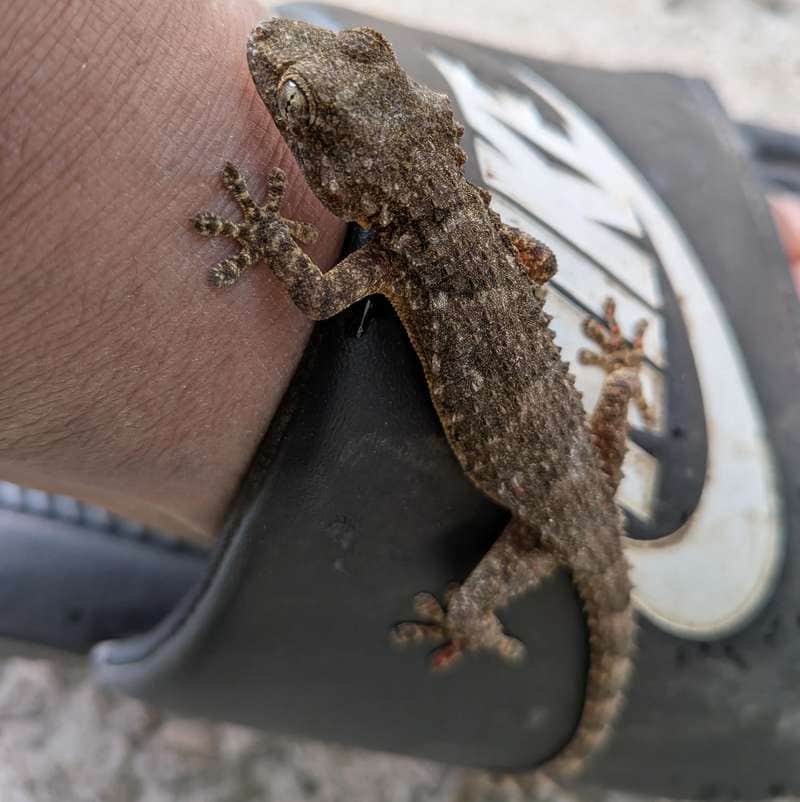
Tarente, Mauritania
The most famous and most common gecko in the Mediterranean region—right on my foot!Magical toes: Look at the shape of its toes, which are wider at the tips. The undersides are covered with billions of microscopic hairs (setae) that generate physical forces (Van der Waals forces). This is what allows it to run on ceilings, on smooth glass, or—as shown here—vertically on plastic with no trouble at all.
The unusual detail: If you look closely at the base of her hind legs and her flanks, you can make out tiny red dots. These are small parasitic mites (of the genus Geckobia), found almost exclusively on geckos, which often cling to areas where the skin is thin. Nothing to worry about—it’s very common in nature!
Completely harmless, she’s the perfect roommate for summer evenings since she hunts mosquitoes, moths, and… checkerboard flies drawn to the light of outdoor lamps!
Beetle
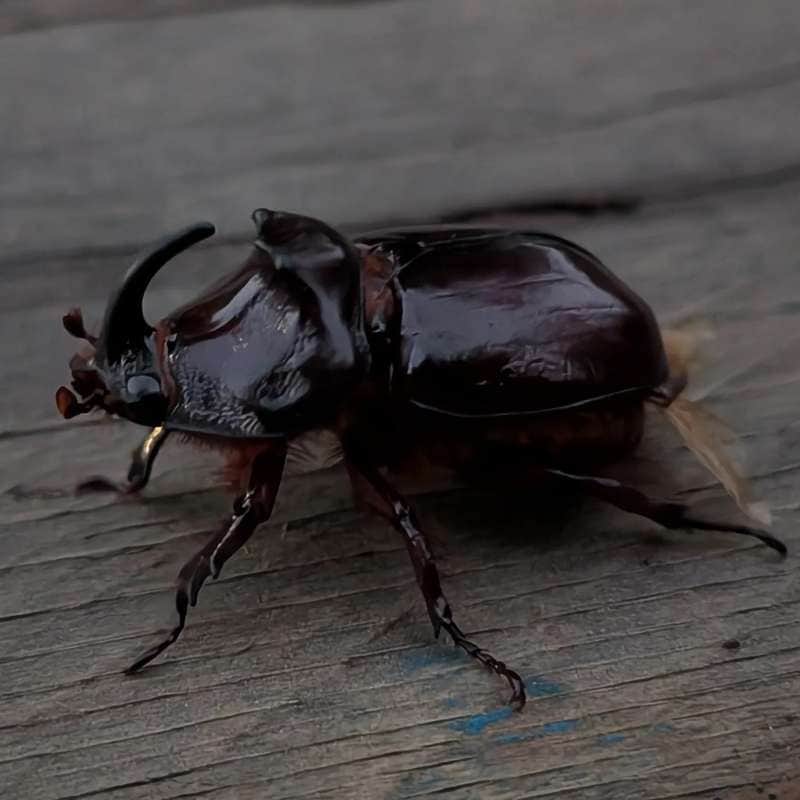
Male European rhinoceros beetle (Oryctes nasicornis)
The "fur" on its belly: If you look just below its head and around its legs, you can see very dense reddish hair. This is a classic characteristic of this family of beetles.Its larvae love decaying wood and compost, where they spend several years growing. The adult, on the other hand, lives only a few weeks in the summer, eats almost nothing, and devotes all its energy to reproduction. Completely harmless despite its armored appearance, it makes for quite a nocturnal encounter in the garden!
Snail
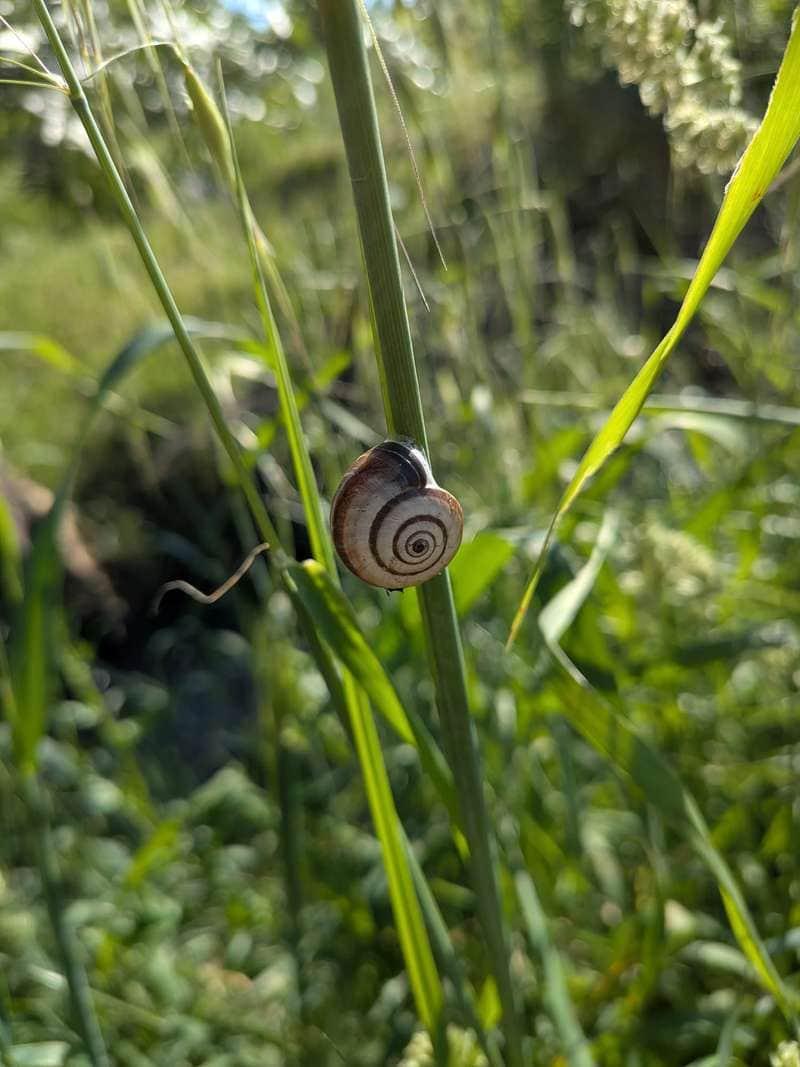
Dune snail (also known as "Cagouille" or, more scientifically, *Theba pisana*)
This species is extremely common in the dry, sunny habitats of southern France.In late spring and throughout the summer, the Mediterranean soil becomes a veritable furnace. To avoid getting “cooked” on the scorching ground, this snail climbs to the tops of dead plant stems or weeds. There, it finds slightly cooler air and escapes the radiant heat from the ground.
"Dormancy" mode (estivation): Once perched, it secretes a thin membrane of dried slime (called an epiphragm) to hermetically seal the entrance to its shell. This allows it to seal in moisture and spend the entire summer sleeping, protected from dehydration, while waiting for the fall rains.
The spiral pattern: Its light-colored, cream, or white shell is often adorned with fine brown spiral lines of varying intensity. This light color is no accident: it serves to reflect sunlight (like white houses in the South) to prevent heat buildup.
They often do this in groups, and it’s not uncommon while out walking to see stems literally “clustered” with dozens of these little white snails.
Arachnids
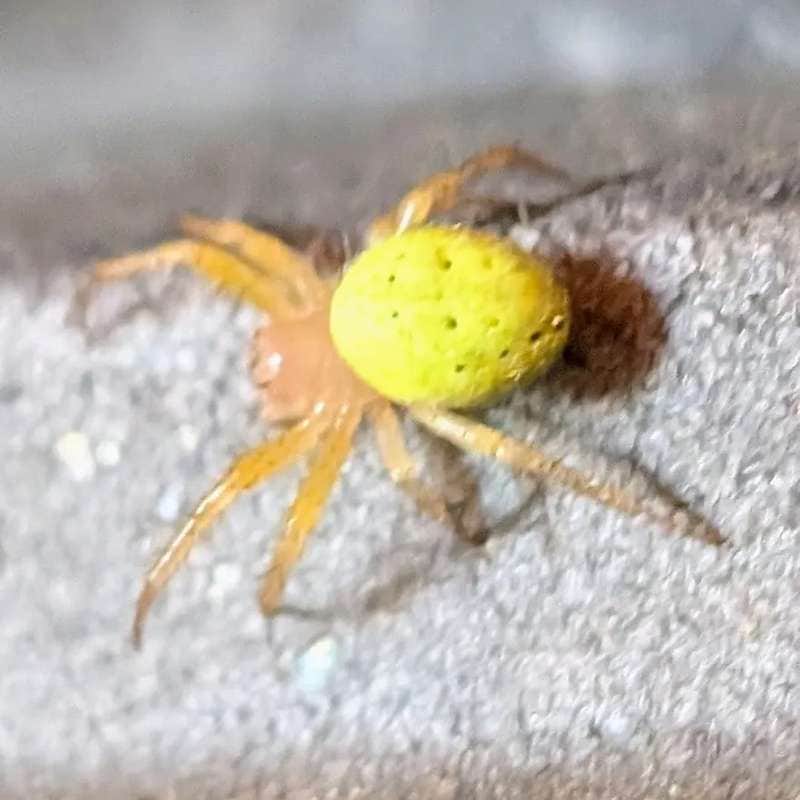
Cucumber spider (genus Araniella cucurbitina)
It is a small spider from the Araneidae family—the same family as the large diadem spider—but in a miniature, flashy version.Leaf-like camouflage: With its bright chartreuse or vivid yellow abdomen (the “gaster”), it goes completely unnoticed when perched among green leaves or buds in the spring.
The small black dots: If you look closely at the top of its abdomen, you can see tiny black dots arranged in pairs (often 4 or 5 pairs). These are a kind of internal muscular dimple, typical of this genus.
Unlike large orb-weaver spiders, which spin enormous webs in the middle of a path, the cucumber orb-weaver prefers to weave a very small orb-shaped web, often stretched horizontally between two leaves or on a low bush. There, it patiently waits for small flying insects such as winged aphids or tiny flies. Completely harmless to us, it’s an excellent guardian of plants!
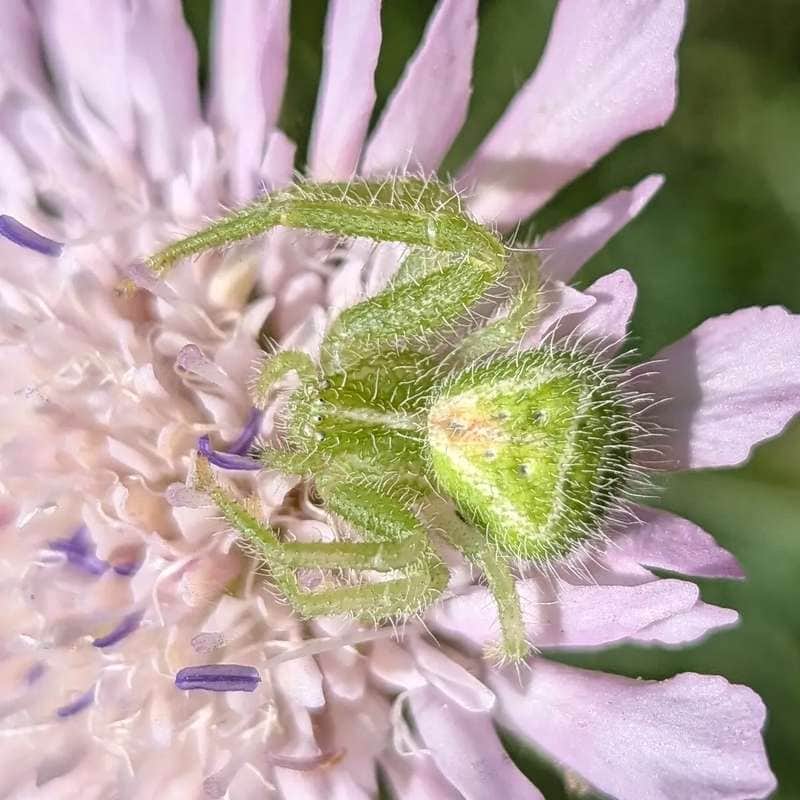
Green crab spider (more specifically, the green Thomise, Heriaeus hirtus or Heriaeus melloteei)
The crab spider’s posture: Its first two pairs of legs—which are much longer and sturdier than the hind legs—are clearly visible, spread wide open. It adopts this exact posture to snatch pollinating insects (bees, butterflies, hoverflies) out of the air as they come to feed on the flower.Like all crab spiders (Thomisidae), it does not spin a web. It relies entirely on its camouflage and the devastating power of its venom to paralyze prey that is sometimes two to three times its size.
Antlion (family Myrmeleontidae)
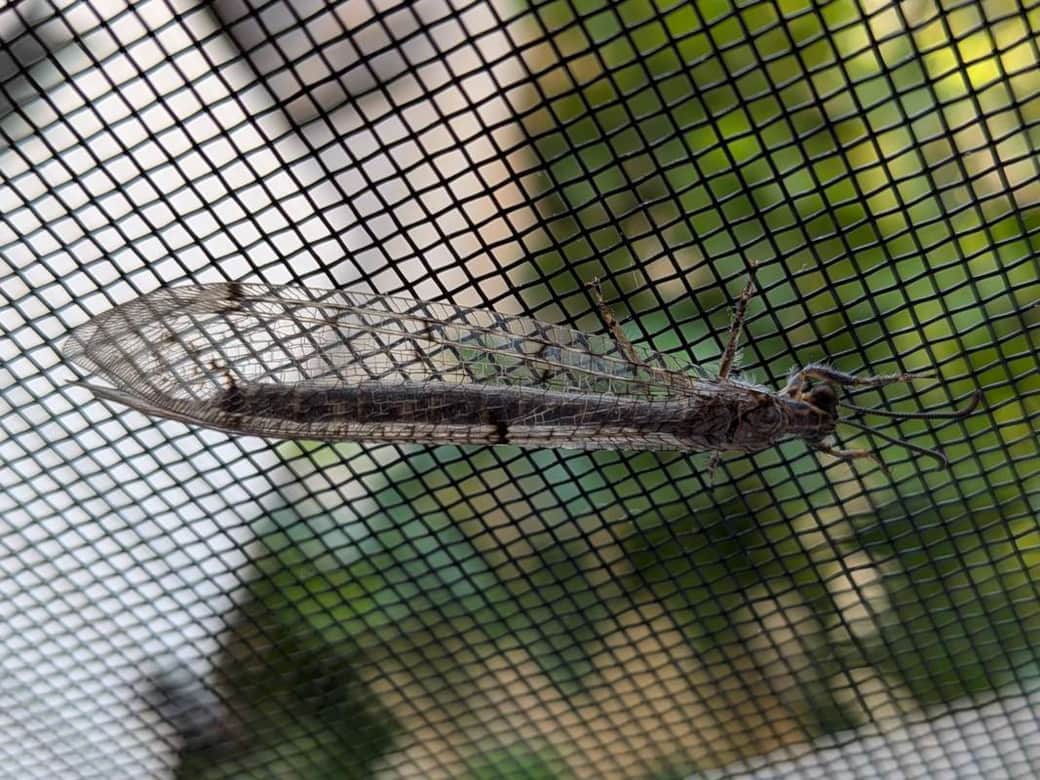
The Parisian antlion (Myrmeleon formicarius) or the long-horned antlion (Distoleon tetragrammicus)
This is an adult (imago). It is very often mistaken for a dragonfly, but it is a completely different insect (order Neuroptera).Did you know? While the adult looks like a slender creature, its larva is a formidable, stocky predator that digs funnels in dry sand to trap ants, which then slip to the bottom!
Come see this lush natural environment for yourself—as it changes with the seasons—during a stop at the Villa du Verger.
And why not help us complete this inventory!