Flowers from the garden of the Villa du Verger (Orchard Villa)
Discover the diversity of flowers throughout the years and seasons in the Villa du Verger garden. Some are still there; others have disappeared or been replaced. Some are so small you won’t even notice them, yet they’re so beautiful when viewed up close. Every year is different. In the years when we leave areas to grow wild—to promote biodiversity and soil regeneration—we don’t tend the vegetable garden, and there are more wildflowers. I took all these photos with my phone (a Google Pixel 9a)—mostly in the orchard, and some during walks with our dog Looping in Valergues or in the Valergues forest. It took me several years to document all these beautiful sights.
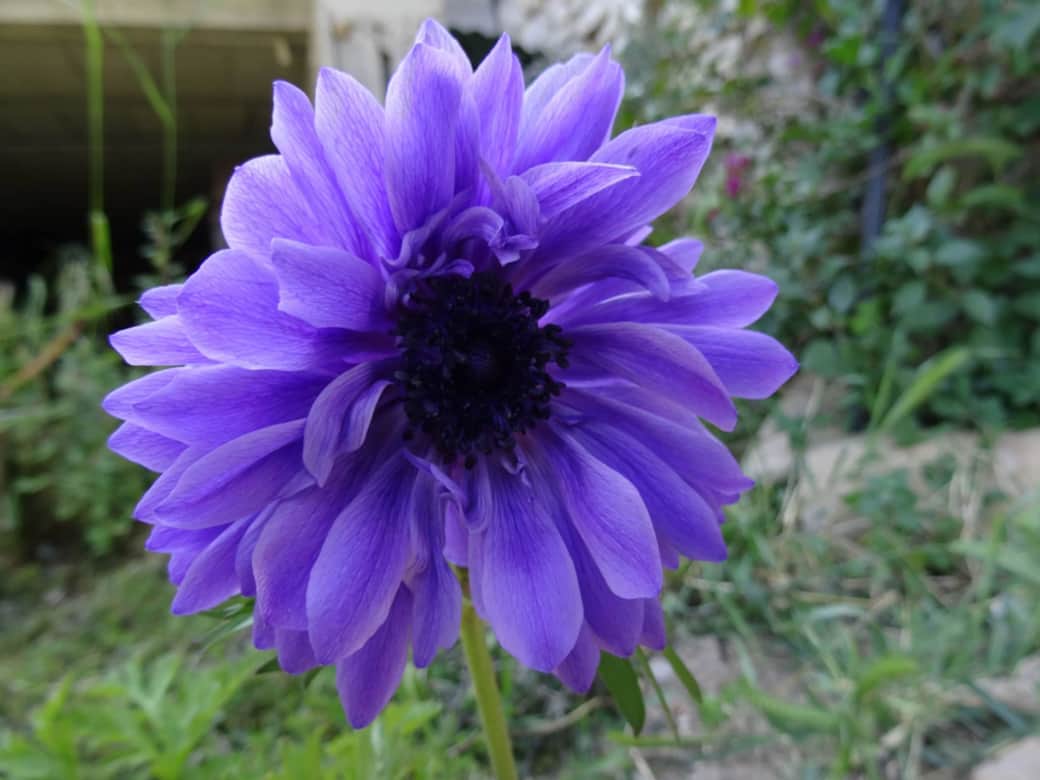
Purple Crowned Anemone (Anemone coronaria)
- Description & Wild Beauty: With its silky petals of a magnetic purple and its dark center, this flower sways at the slightest breeze (hence its name, derived from the Greek word *anemos*). It brings a touch of vibrant poetry to the garden as early as the beginning of spring.
- Its Role in Our Ecosystem: Blooming very early in the season, it provides a crucial food source (pollen and nectar) for the first pollinators (bees, bumblebees) just emerging from their winter hibernation.
- The Eco-Traveler’s Tip: Take a close look: the anemone opens wide in the sun and closes in the evening or when it rains to protect its pollen. A beautiful lesson in adapting to the climate!
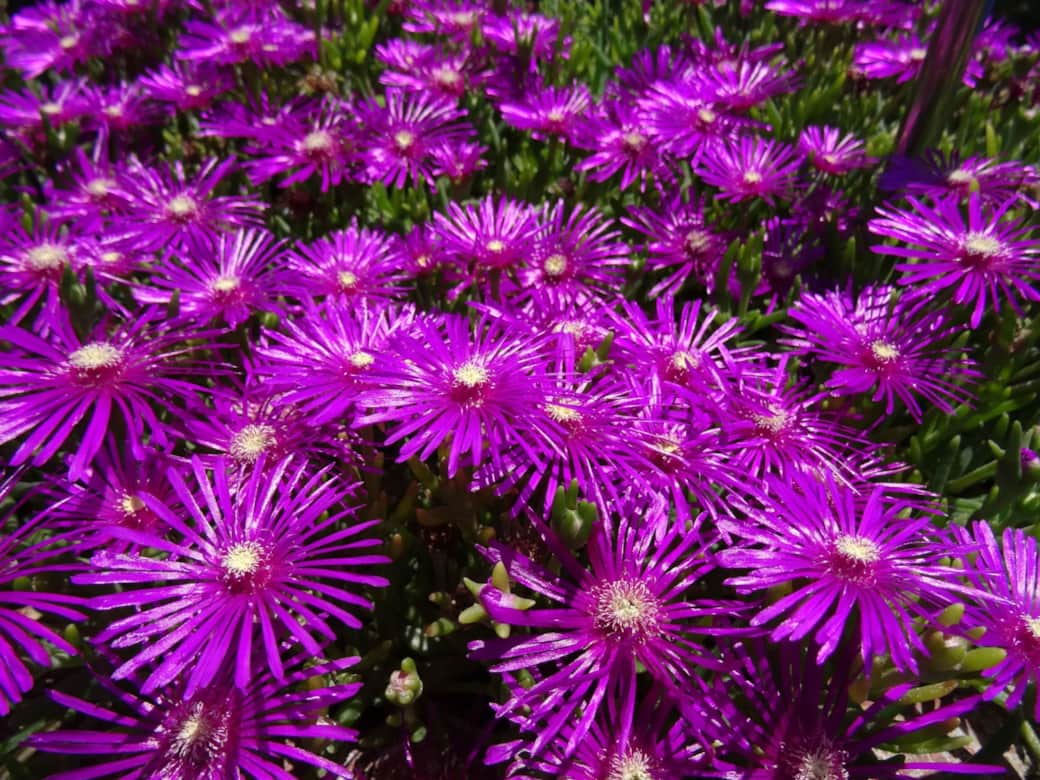
Delosperma (Cooper's Purslane)
- Description & Wild Beauty: A veritable carpet of light, this succulent is covered with a multitude of small, star-shaped, bright purple flowers with white-yellow centers. Its fleshy, evergreen foliage forms a dense ground cover, offering an explosion of vibrant colors under the Valergues sun.
- Its role in our ecosystem: A champion of frugality, it stores water in its leaves, allowing it to thrive without watering. Its flowers, which are very rich in nectar, provide an ideal and sustainable food source for a multitude of pollinating insects throughout the summer.
- The Eco-Traveler’s Tip: Delosperma is a model of resilience in the face of climate change. It shows us that it’s possible to create a lush, colorful, and vibrant garden while carefully conserving every drop of water.
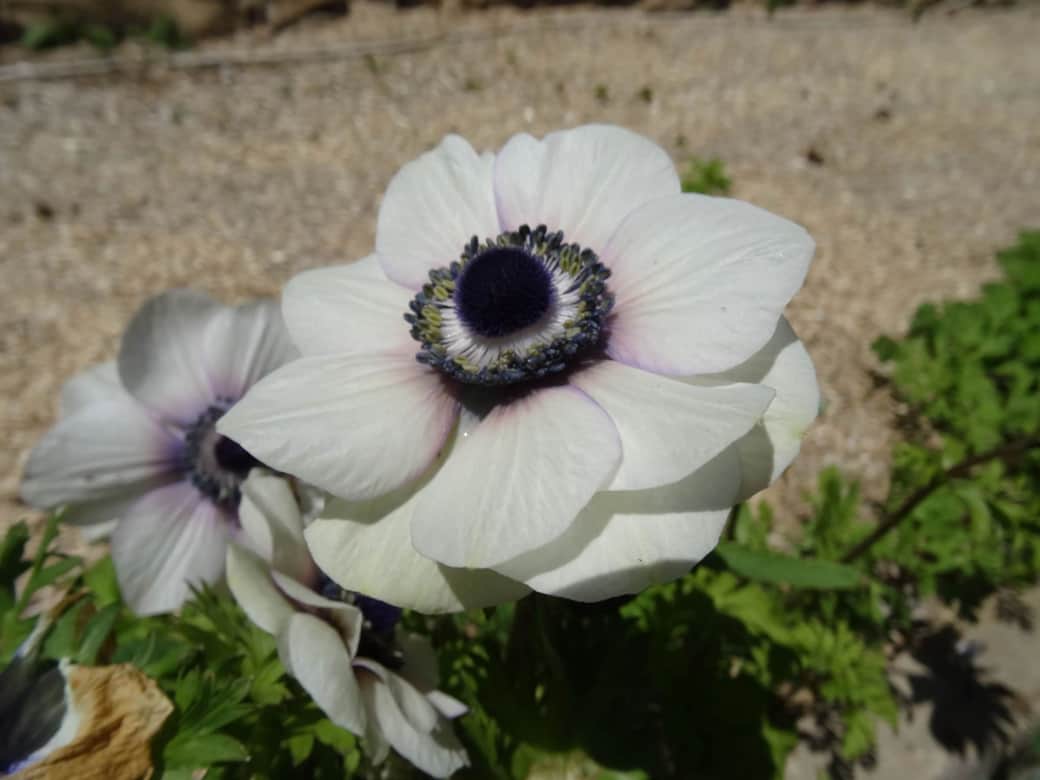
The White Caen Anemone
- Description & Wild Beauty: With its rare elegance, this anemone variety offers a striking contrast between its large, pure-white petals and its very dark, velvety blue-black center. A hint of purple delicately accentuates the base of its petals, lending a unique, graphic grace to garden borders.
- Its role in our ecosystem: Like its purple cousin, it blooms as soon as winter ends. Its wide-open corolla serves as a visual landmark and an ideal landing spot for early pollinators, providing them with a much-needed meal as they awaken.
- A Tip from the Eco-Traveler: Nature loves to showcase its beauty in many forms: by combining different colors of the same species, our garden recreates the diversity of natural habitats. Keep your eyes peeled for these subtle variations as you stroll through the Villa!
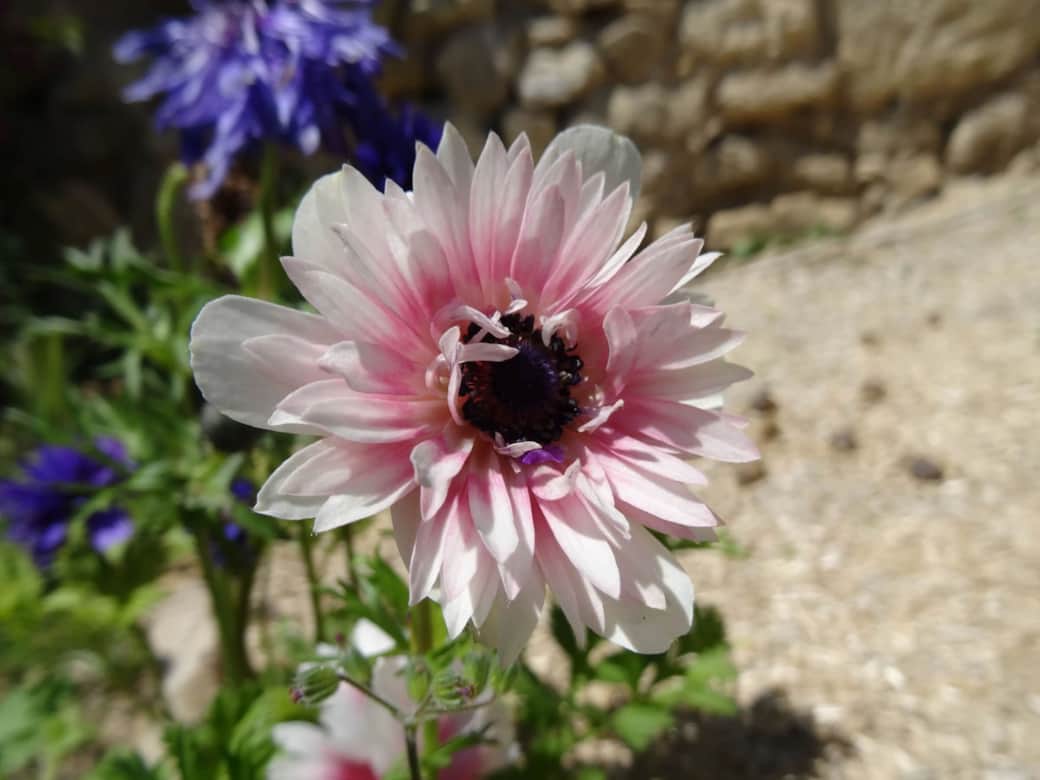
The Pink and White Two-Toned Anemone
- Description & Wild Beauty: This stunning double variety stands out for its slender petals, which display a poetic gradient ranging from a soft pink at the center to a luminous white at the tips. Its dark, velvety center creates a striking contrast, evoking a true botanical watercolor painting at the foot of our old stone walls.
- Its role in our ecosystem: Despite its dense, double-flowered form, its stamens remain easily accessible. It serves as a prime feeding stop for hoverflies (small flies disguised as wasps, the gardener’s great allies) and solitary bees as soon as the weather begins to warm.
- A Tip from the Eco-Traveler: This pastel palette shows just how beautiful cultivated biodiversity can be. At the Villa, we encourage this variety of shapes and colors to provide insects with a landscape that’s as diverse as it is nourishing!
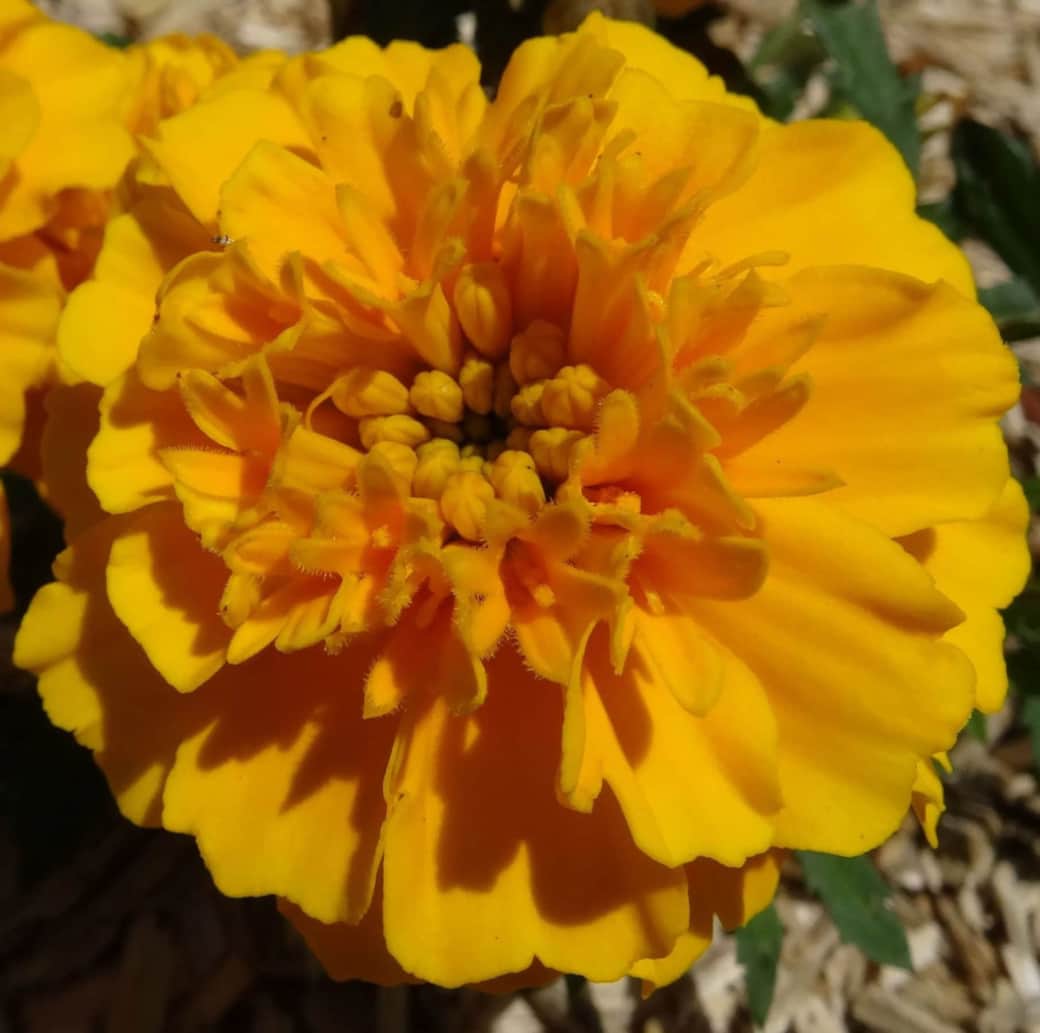
Marigold (Tagetes)
- Description & Wild Beauty: Like a little sun at eye level, this double flower boasts an incredibly intense orange-yellow hue. Its crinkled, layered petals form a generous, luminous pompon that brightens the flower beds at the Villa du Verger from early summer until the first frosts.
- Its role in our ecosystem: It is the ultimate guardian of our vegetable garden. Its roots secrete natural substances that repel nematodes (small, harmful worms), while the aromatic scent of its foliage repels many pests while attracting beneficial insects.
- The Eco-Traveler's Tip: The marigold is the perfect example of how an eco-friendly garden can thrive without chemicals. Here, we use companion planting to let nature protect itself—all in a gentle way!
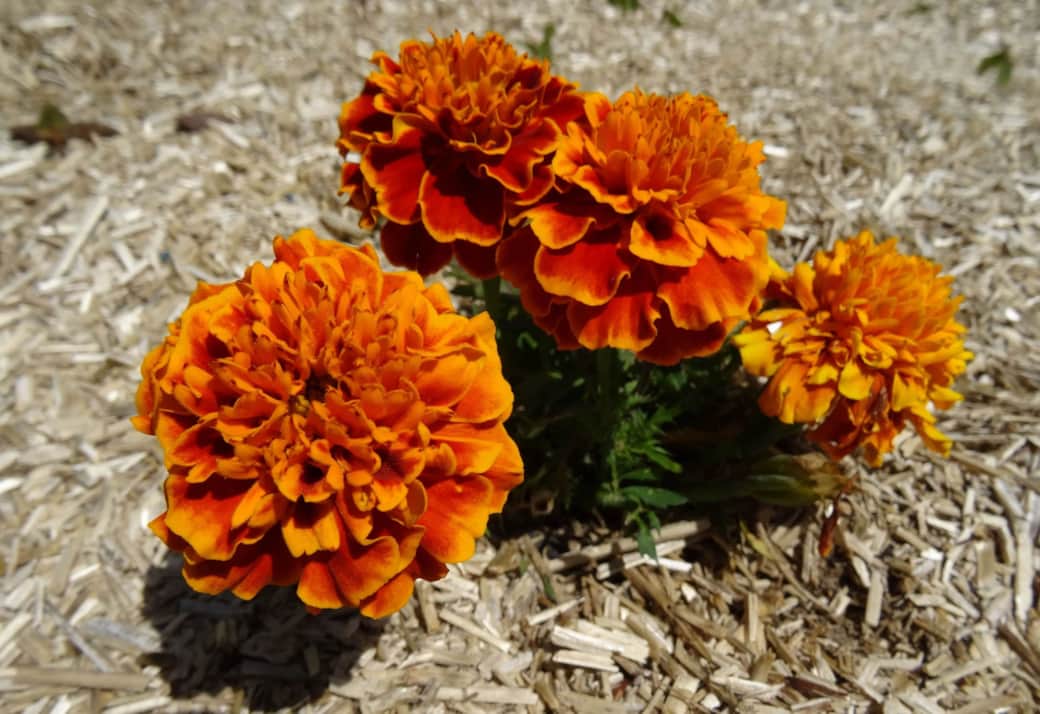
The Two-Toned Marigold (Tagetes)
- Description & Wild Beauty: This variety of marigold dazzles with its warm, autumnal hues. Its golden pompons are accented with broad strokes of brick red and copper on the undersides of the petals. Nestled comfortably amid its protective mulch, this clump adds a vibrant, sun-drenched contrast to the garden.
- Its role in our ecosystem: In addition to naturally protecting the health of the soil and the vegetable garden from pests, its abundant blooms, which last for several months, provide a constant source of food for many small beneficial insects throughout the summer.
- A Tip from the Eco-Traveler: Look at its base—the mulch surrounding it helps retain moisture in the soil and nourishes soil life as it breaks down. It’s one of our secrets here at the Villa for conserving water while keeping our plants happy and vibrant!
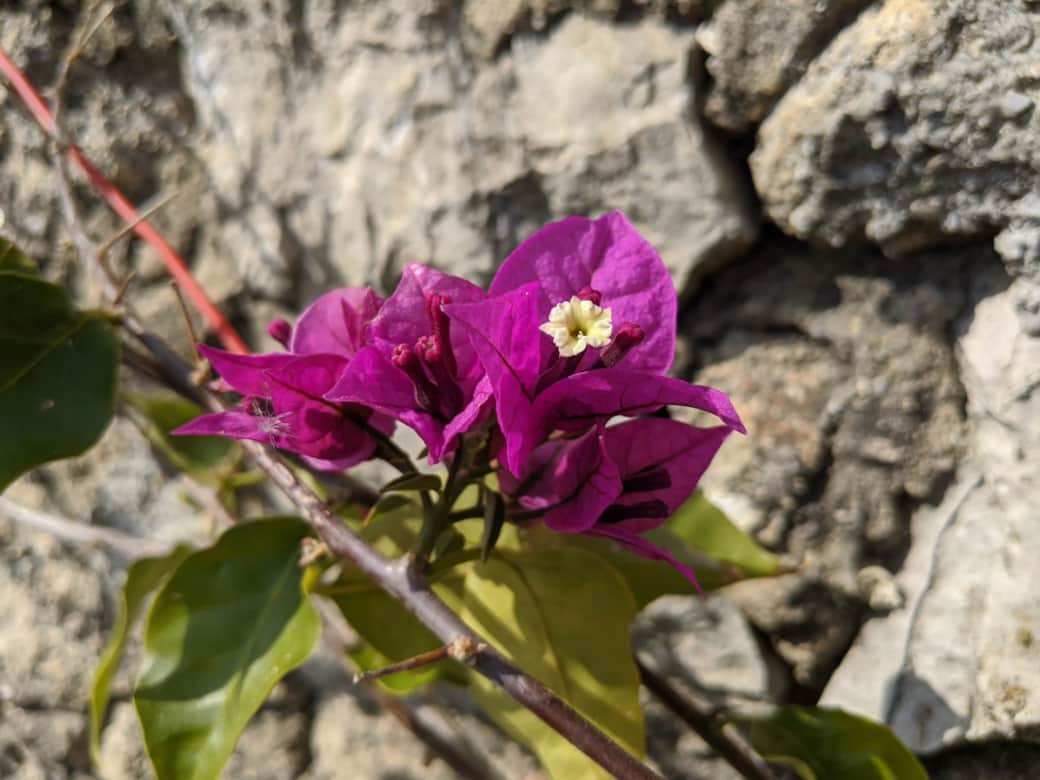
The Bougainvillea
- Description & Wild Beauty: This iconic climbing vine from the South creates a fascinating display against our stone walls. What we mistake for large, deep purplish-pink petals are actually modified leaves (bracts). The true flower is the tiny cream-colored star nestled in the center, a sight of absolute delicacy.
- Its role in our ecosystem: A lover of sun and heat, the bougainvillea grows upward, creating corridors of greenery along building facades. It thus provides a discreet, hanging shelter for small garden insects, while thriving even in dry summers.
- The Eco-Traveler’s Insight: A trick of nature! The bougainvillea relies entirely on the color of its false leaves to guide the eyes of pollinators (and travelers) straight to its heart. A colorful and clever strategy to conserve energy.
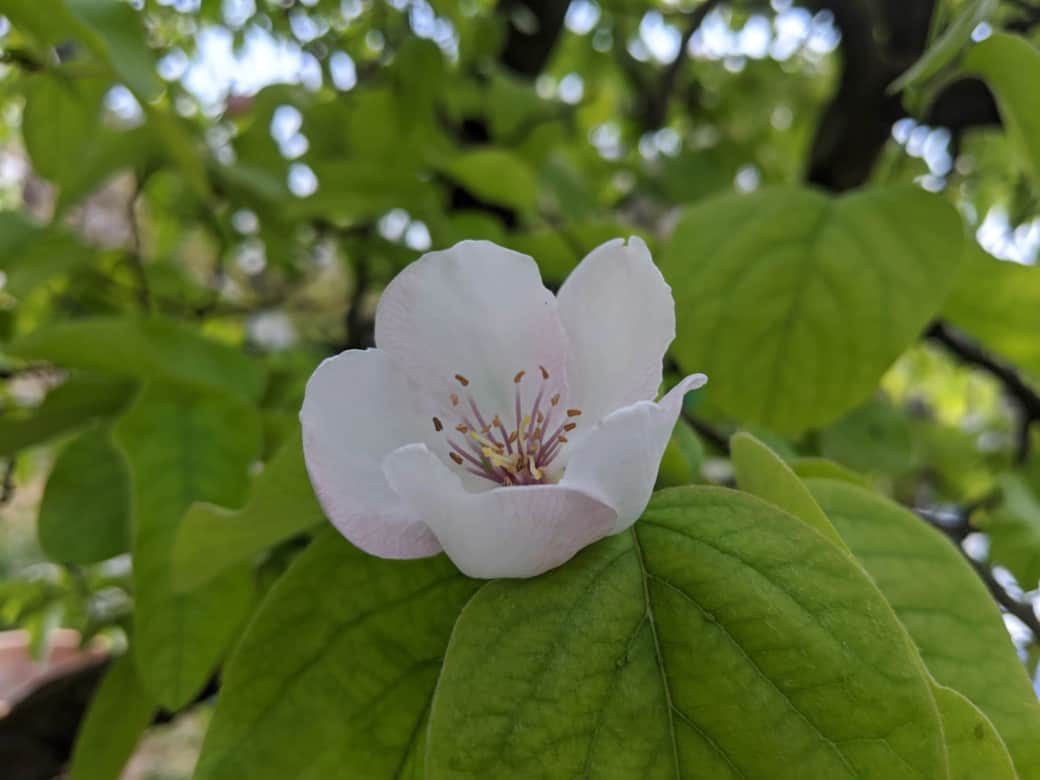
The Quince Blossom
- Description & Wild Beauty: Resting delicately on large, soft-green leaves, this solitary flower boasts a sleek, cup-shaped form. Its large, pure white petals, tinged with a very subtle pink along the edges, surround a center of golden stamens. It is one of the most poetic blooms in the orchard in the spring.
- Its role in our ecosystem: This flower heralds the promise of a bountiful harvest. Highly attractive, it draws large numbers of honeybees and bumblebees with its nectar. Once pollinated, it will slowly develop over the course of several months into a fragrant quince.
- A Tip from the Eco-Traveler: This is the very essence of the Villa du Verger! This flower embodies nature’s perfect cycle: the delicate spring blossoms you see today will give rise to the golden fruits of autumn, which we transform locally into delicious quinces jellies or quinces pastes.
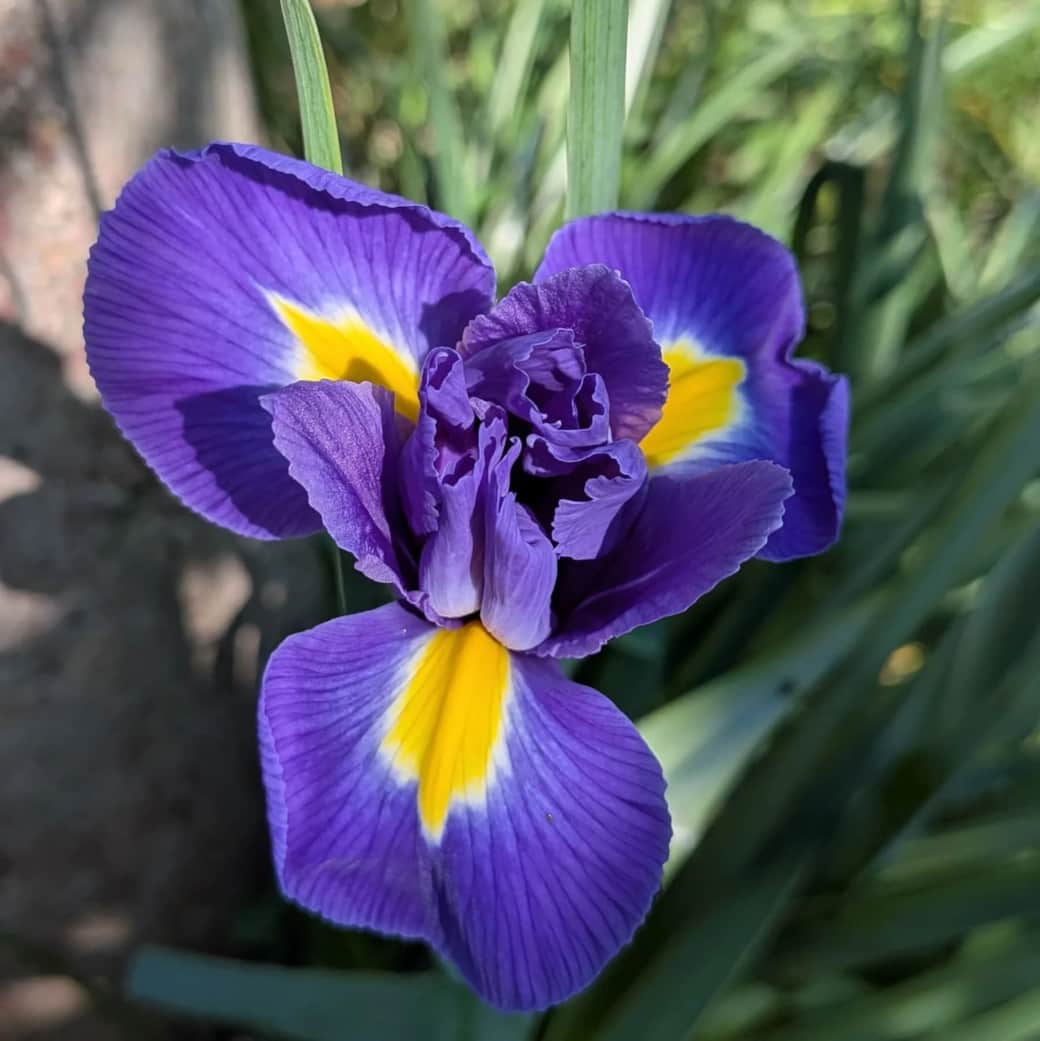
Dutch Iris (Bulbous Iris)
- Description & Wild Beauty: Viewed from above, this iris variety reveals the full richness of its velvety, royal purple petals. Its three large, drooping sepals are marked with a brilliant golden-yellow patch, while its delicately crinkled center lends an almost theatrical depth to this botanical work of art.
- Its role in our ecosystem: These large yellow spots aren’t just there for aesthetic appeal—they’re highly visible “nectar guides” that lead bumblebees directly to the center of the flower. Its sturdy stem and firm petals provide an ideal landing spot for even the heaviest pollinators.
- The Eco-Traveler’s Insight: The iris is a lesson in geometry and natural engineering. Its shape forces the insect to navigate through it in a very specific way, ensuring perfect pollination. It’s a precision collaboration between flora and fauna that’s worth observing up close during your stay!
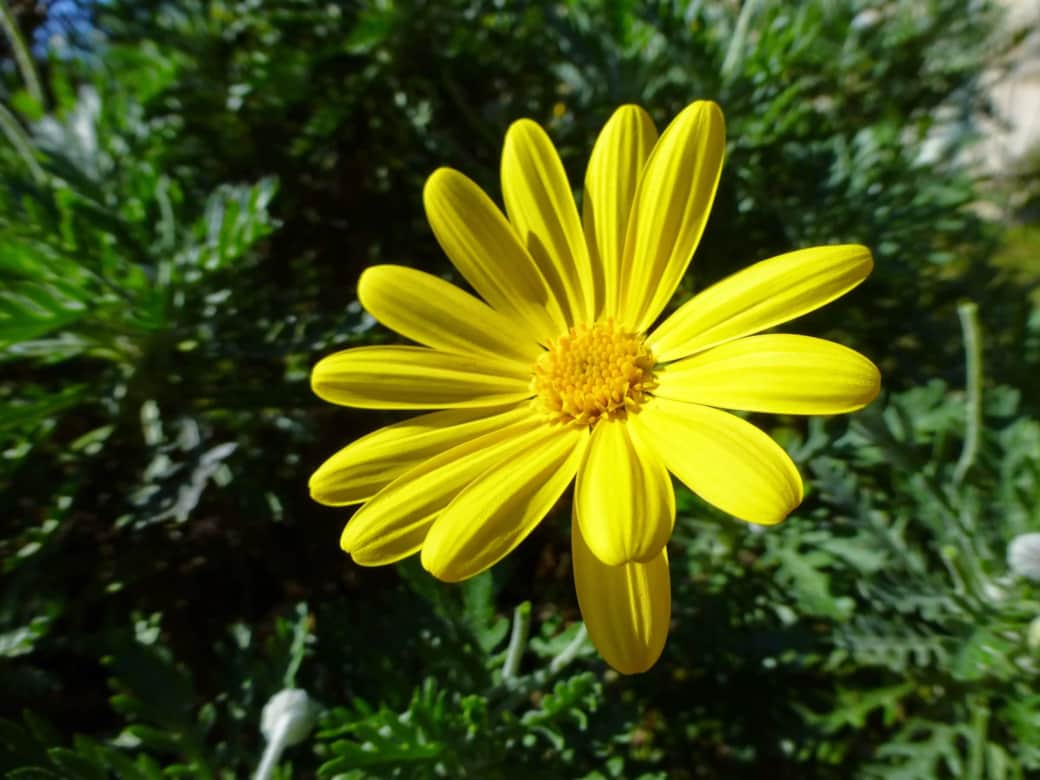
Euryops (Asphodel Daisy / Yellow Daisy)
- Description & Wild Beauty: Resembling a daisy with a brilliant golden-yellow hue, this radiant flower stands out beautifully against the deeply green, finely cut foliage. Its luminous and incredibly abundant blooms bring a distinctly Mediterranean and sun-drenched atmosphere to the Villa’s flower beds.
- Its role in our ecosystem: This shrub is a boon to local biodiversity thanks to its exceptionally long blooming season, which often extends from fall through spring. It provides an essential food source (pollen and nectar) for the hardy insects that remain active during mild winter days.
- The Eco-Traveler’s Tip: The Euryops is a champion of frugality. Perfectly adapted to Valergues’ dry climate, it requires very little water once established. A wonderful source of inspiration for creating gardens that are full of flowers, cheerful, and yet very water-efficient!
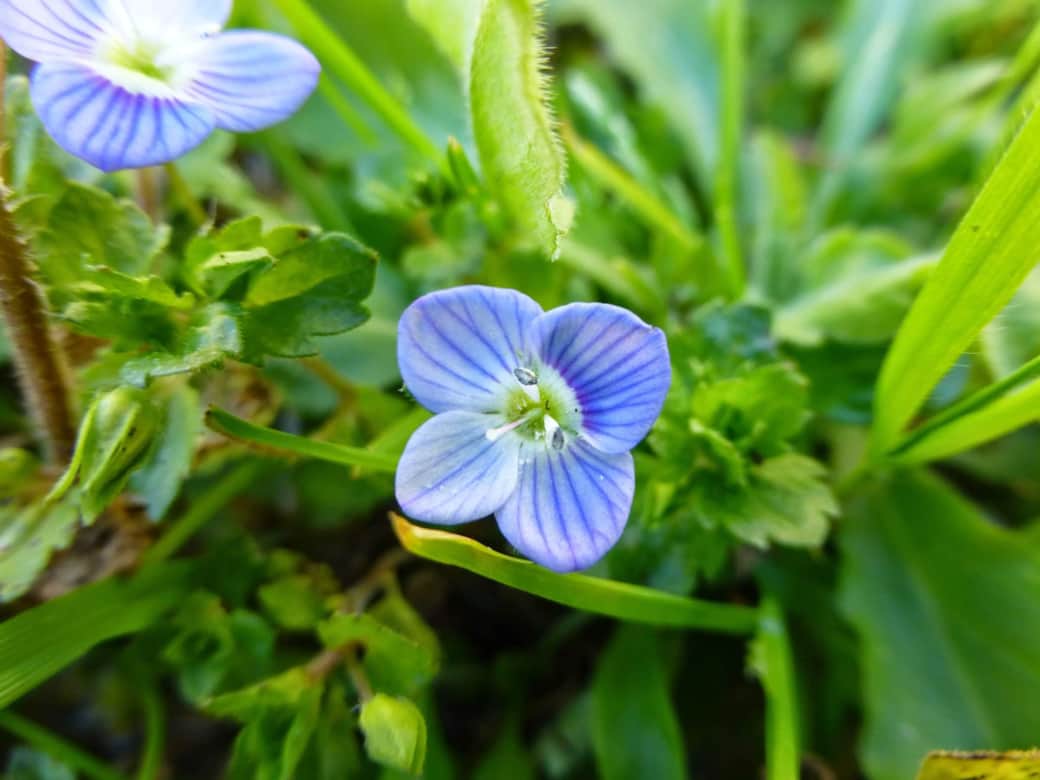
Persian Speedwell
- Description & Wild Beauty: Unobtrusive yet strikingly azure blue, this tiny wildflower—with four petals streaked with dark lines and a white center—blooms close to the ground. It is a true miniature gem that dots the lawns and wild grasses of the Villa du Verger with blue.
- Its role in our ecosystem: As a pioneer plant and natural ground cover, it protects the soil from erosion and helps retain soil moisture. Its small, early-blooming flowers provide a valuable food source for small pollinating insects as soon as the first warm weather of the year arrives.
- A Tip from the Eco-Traveler: The speedwell invites us to slow down and take a closer look at where we’re stepping. Biodiversity isn’t just found in large, majestic flowers—it’s also hidden in these little blue miracles that carpet our grass!
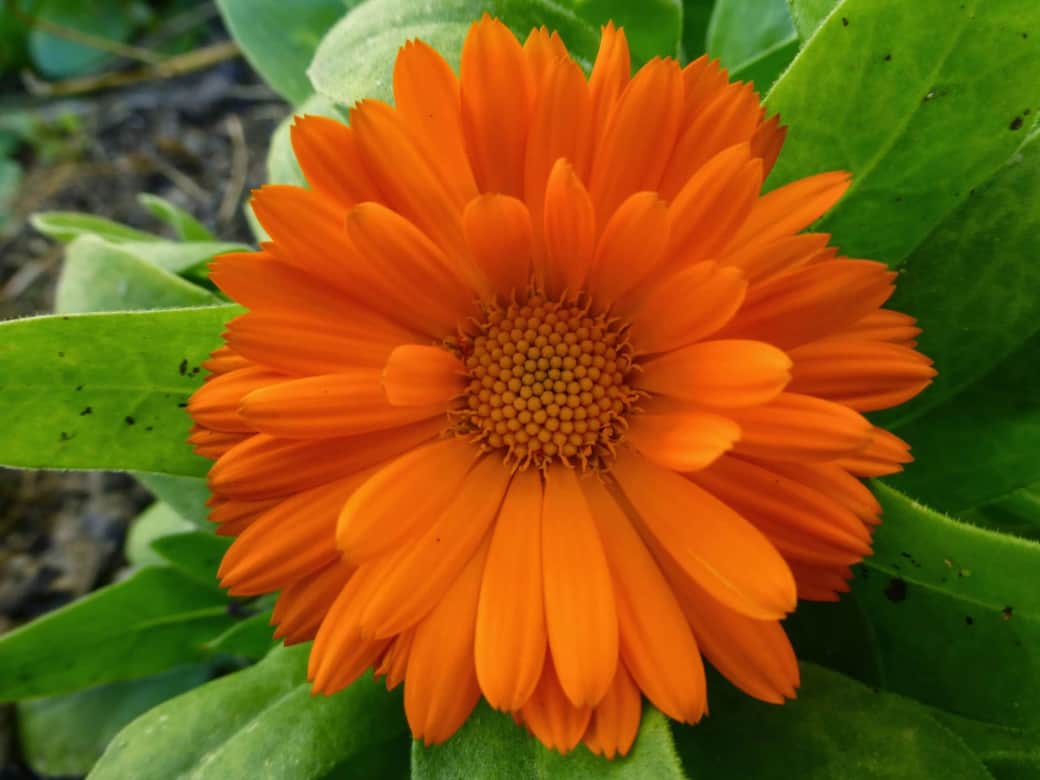
Calendula (Calendula)
- Description & Wild Beauty: With its radiant corolla of bright, warm orange, the marigold is a true source of cheer. Its full, generous blooms stand out beautifully against its light green foliage, bringing an incomparable brightness to the Villa’s borders.
- Its role in our ecosystem: It is an exceptional companion plant. In addition to attracting a host of pollinators and beneficial insects (such as hoverflies), the marigold naturally repels certain vegetable garden pests and improves soil health through its roots.
- The Eco-Traveler’s Tip: Calendula is one of the most famous medicinal plants! Used since ancient times for its soothing, healing, and softening properties, it reminds us just how well the plants in our garden can take care of us—if we let them flourish.
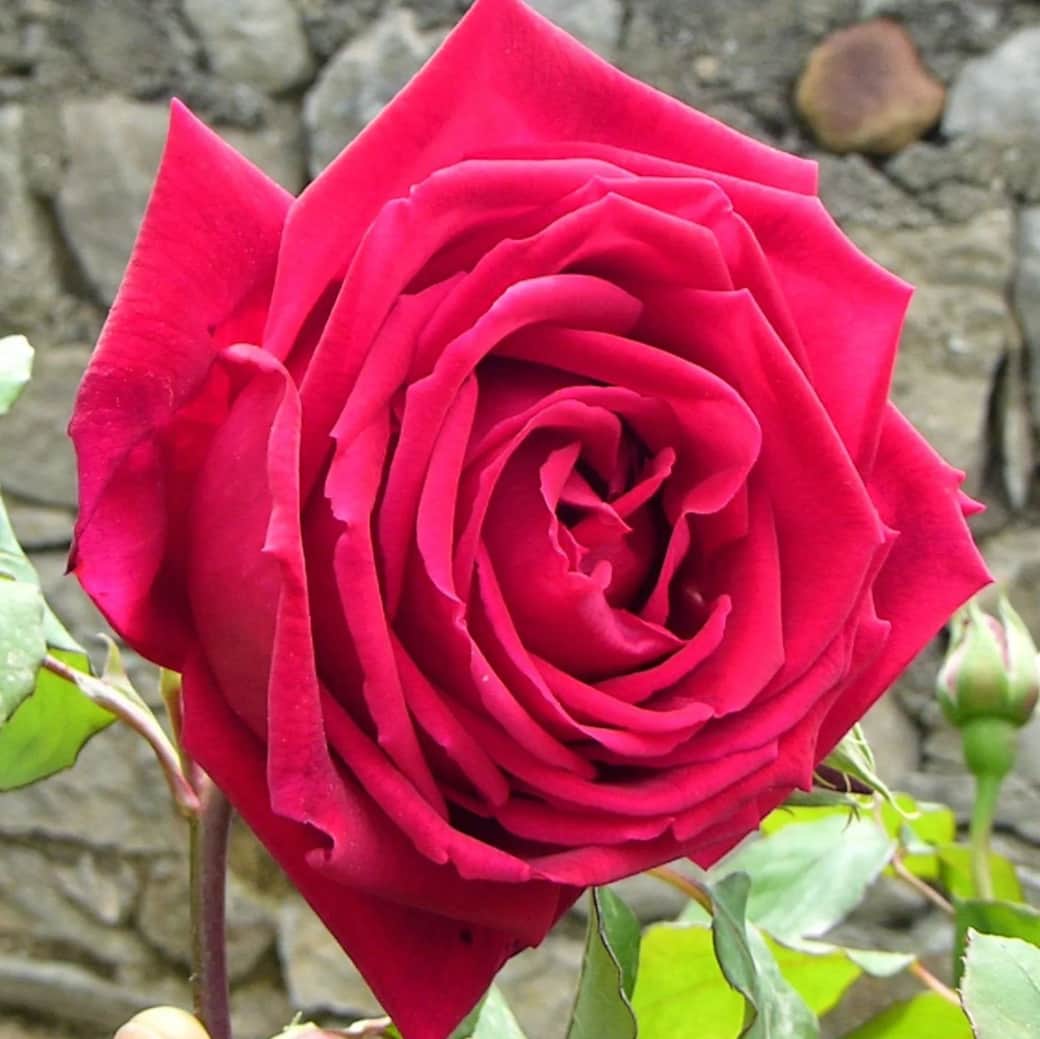
The Red Rose (The Rose Bush)
- Description & Wild Beauty: The undisputed queen of the garden, this rose displays velvety red petals of the deepest hue. Its classic, elegant silhouette stands out beautifully against the rustic charm of our golden stone walls, exuding a subtle and enchanting fragrance.
- Its role in our ecosystem: The rose bush is a true pillar of biodiversity. Its flowers attract pollinating insects, while its thorny stems provide a protective refuge that is highly valued by small garden birds (such as warblers and sparrows) as a place to hide from predators.
- A Tip from the Eco-Traveler: To protect our rose bushes, we don’t use any chemicals at the Villa! We rely entirely on ladybugs and hoverflies, the aphids’ formidable natural predators. It’s the perfect harmony of our ecosystem that preserves the beauty of this “queen for a day.”
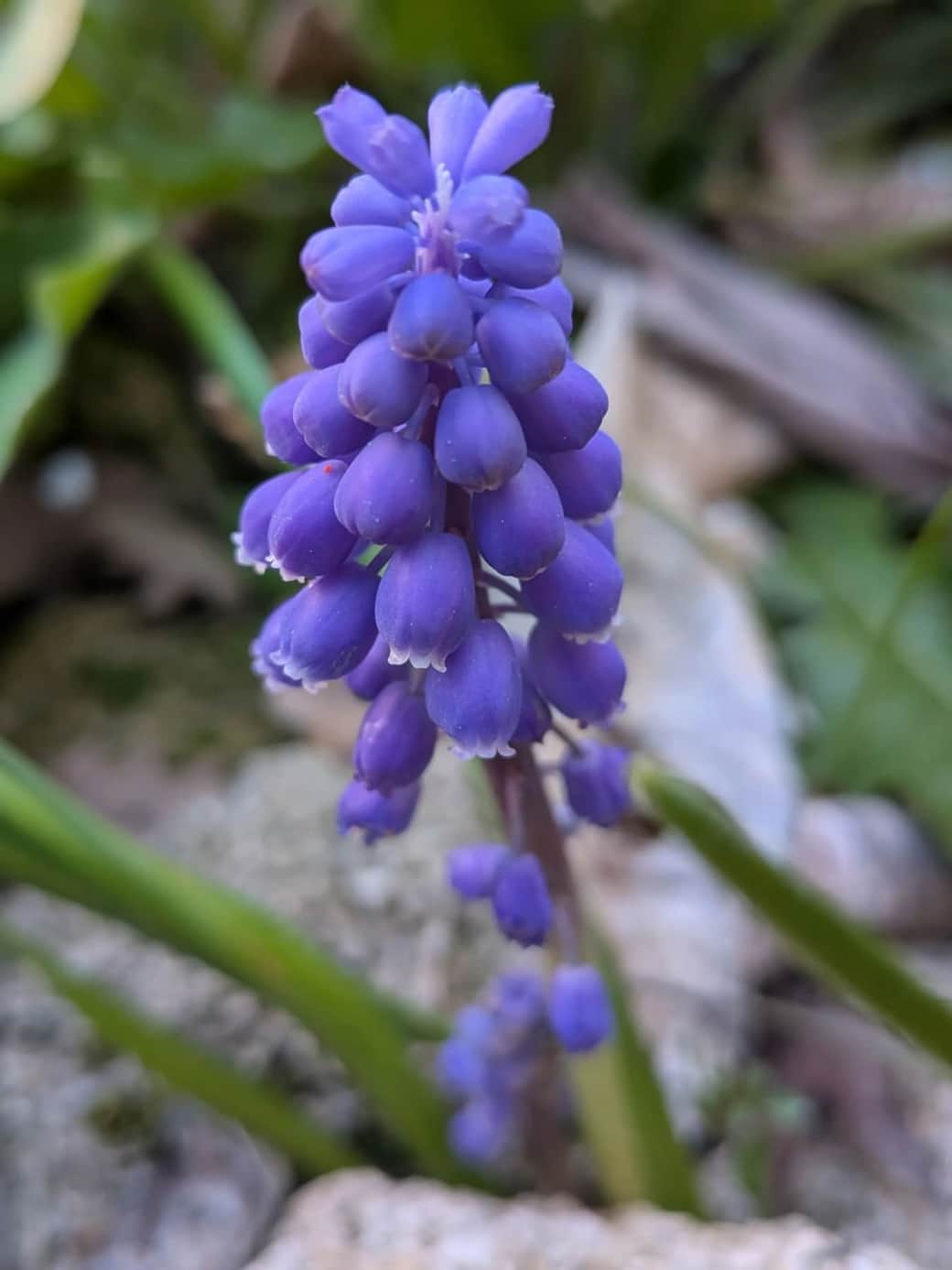
Muscari (commonly known as grape hyacinth or Muscari neglectum / armeniacum)
- Description & Wild Beauty: Standing like a tiny pyramid of deep blue-violet bells, this small bulbous flower heralds the return of sunny days. Its flowers, clustered closely together, are edged with a delicate white border, reminiscent of pretty clusters of miniature grapes resting close to the ground.
- Its role in our ecosystem: Appearing very early in the spring, muscari is a valuable source of nectar. Its blue color, which is particularly attractive to bees and bumblebees, draws them to its sugar-rich nectar, providing them with the energy they need to resume their activities.
- The Eco-Traveler’s Tip: A very unassuming flower that keeps its secrets well! Despite its small size, the muscari is remarkably hardy and multiplies easily from one year to the next. It reminds us that in nature, perseverance has nothing to do with size.
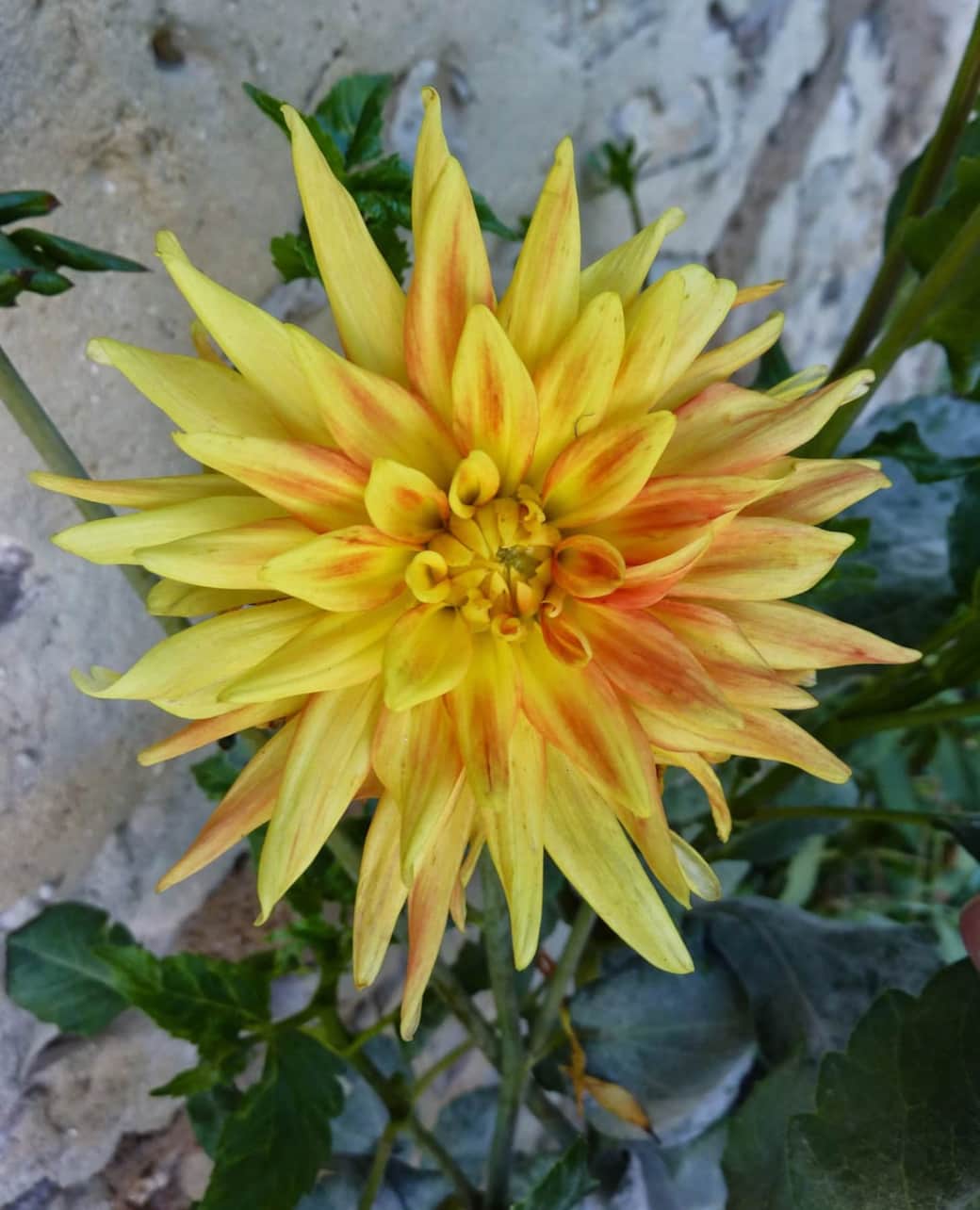
Orange-yellow cactus dahlia (Dahlia hybrida)
- Description & Wild Beauty: With its slender, needle-like petals, this variety of cactus dahlia boasts a spectacular structure. Its luminous color gradient, ranging from a vibrant golden yellow to shades of orange and copper, evokes a veritable botanical fireworks display set against our old stone walls.
- Its role in our ecosystem: Blooming profusely from summer until the first frosts of fall, the dahlia takes over from the spring blooms. Its large, dense flowers provide a valuable refuge and a late source of pollen for bees and butterflies before winter sets in.
- A Tip from the Eco-Traveler: The dahlia is a bulbous plant (with tubers) that lies dormant underground throughout the winter, only to bloom more beautifully each year. It’s a magnificent symbol of perseverance and renewal—perfect for admiring on your balmy summer evenings at the Villa!
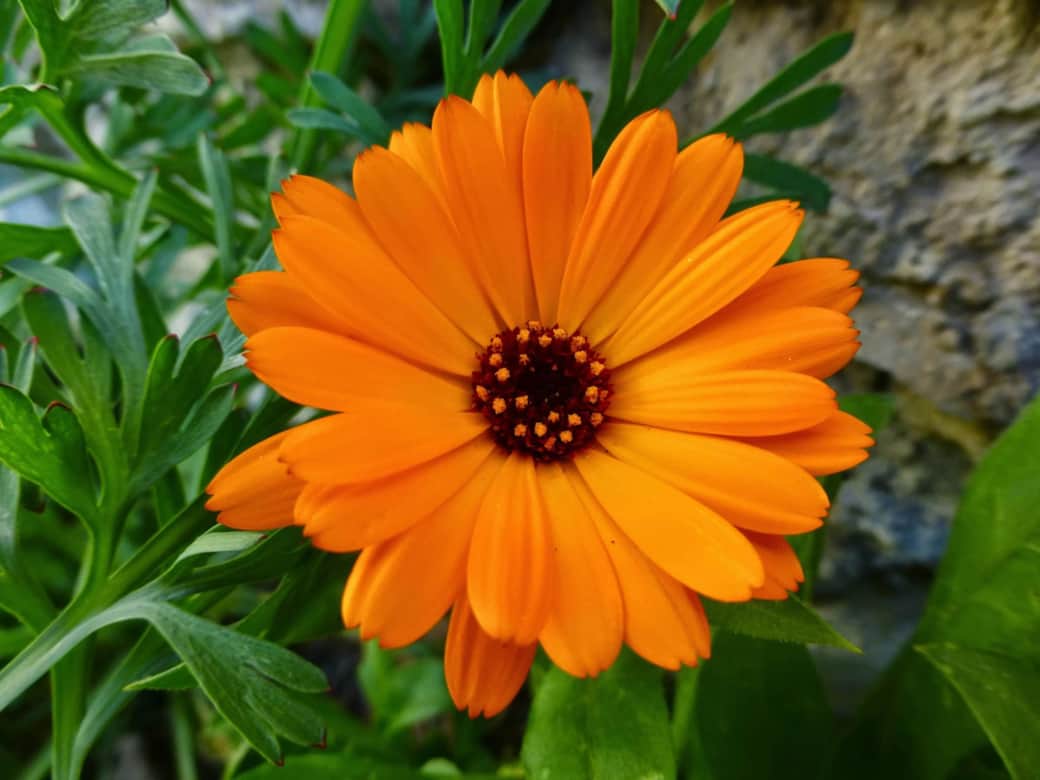
Marigold (or Wild Calendula)
- Description & Wild Beauty: Unlike the heavily double horticultural varieties, this marigold features a simple, uncluttered corolla in a very bright apricot-orange hue. Its neatly arranged petals surround a contrasting deep brown-purple center, giving it a rustic look and an incomparable natural elegance when planted at the foot of our low walls.
- Its role in our ecosystem: This simple shape is a blessing for wildlife: pollen and nectar are directly accessible, with no obstacles. It is one of the garden’s best food sources for wild bees, butterflies, and hoverflies, which find abundant and easily accessible food there.
- A Tip from the Eco-Traveler: Simple flowers, like this wild marigold, are the hallmark of an authentic garden. By avoiding varieties that have been overly altered by humans, we ensure that our little winged friends have a natural, bountiful feast that’s perfectly suited to their needs!
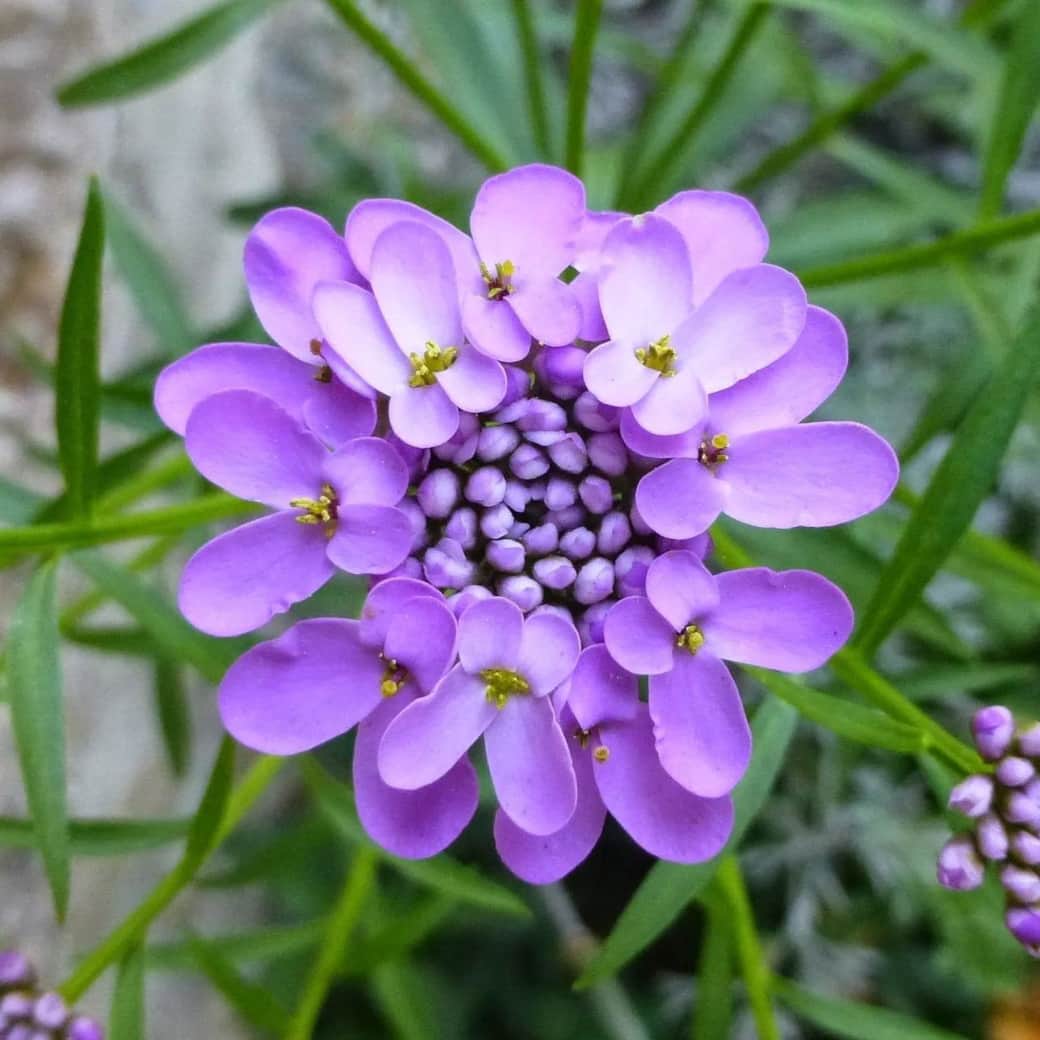
Umbellate Iberis (Thlaspi)
- Description & Wild Beauty: This pretty flower forms charming little round clusters of a delicate mauve color. If you look closely, each tiny flower is asymmetrical: its outer petals are larger, giving the whole flower a very graphic and airy, lace-like appearance.
- Its role in our ecosystem: Its flattened dome shape is a boon to pollinators, especially butterflies and hoverflies, which can land on it comfortably. As a highly nectar-rich plant, Iberis provides a bountiful feast for all the small creatures in the garden for many weeks.
- A Tip from the Eco-Traveler: Iberis loves the sun and thrives especially well in dry, poor, or stony soil. It happily takes over the Villa’s rock gardens, reminding us that delicacy and hardiness make an excellent combination in the Mediterranean climate.
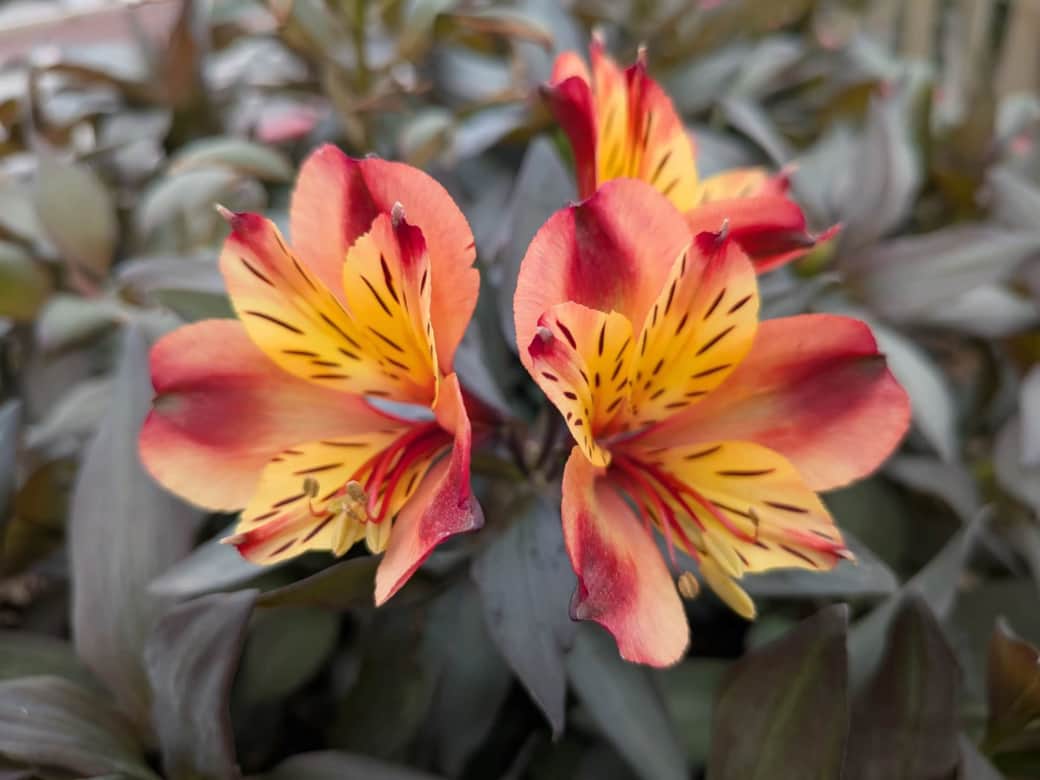
The Alstroemeria (Inca Lily)
- Description & Wild Beauty: This sumptuous exotic flower has a fiery spirit. Its corollas, in warm shades of orange and coppery red and streaked with small brown stripes, stand proudly above dark, purplish foliage with a striking, graphic pattern. It is a true work of exotic art that adds striking depth to the Villa’s flower beds.
- Its role in our ecosystem: Thanks to its exceptionally long blooming period, which often stretches from early summer until the first frosts, the alstroemeria is a valuable ally. It provides a constant and long-lasting source of food for voracious pollinators at a time when other flowers are beginning to fade.
- The Eco-Traveler’s Tip: Native to South America, this plant has adapted wonderfully to our region’s mild climate. It perfectly illustrates how species from other regions can coexist in complete harmony with our local wildlife, while requiring minimal watering once they’re well established!
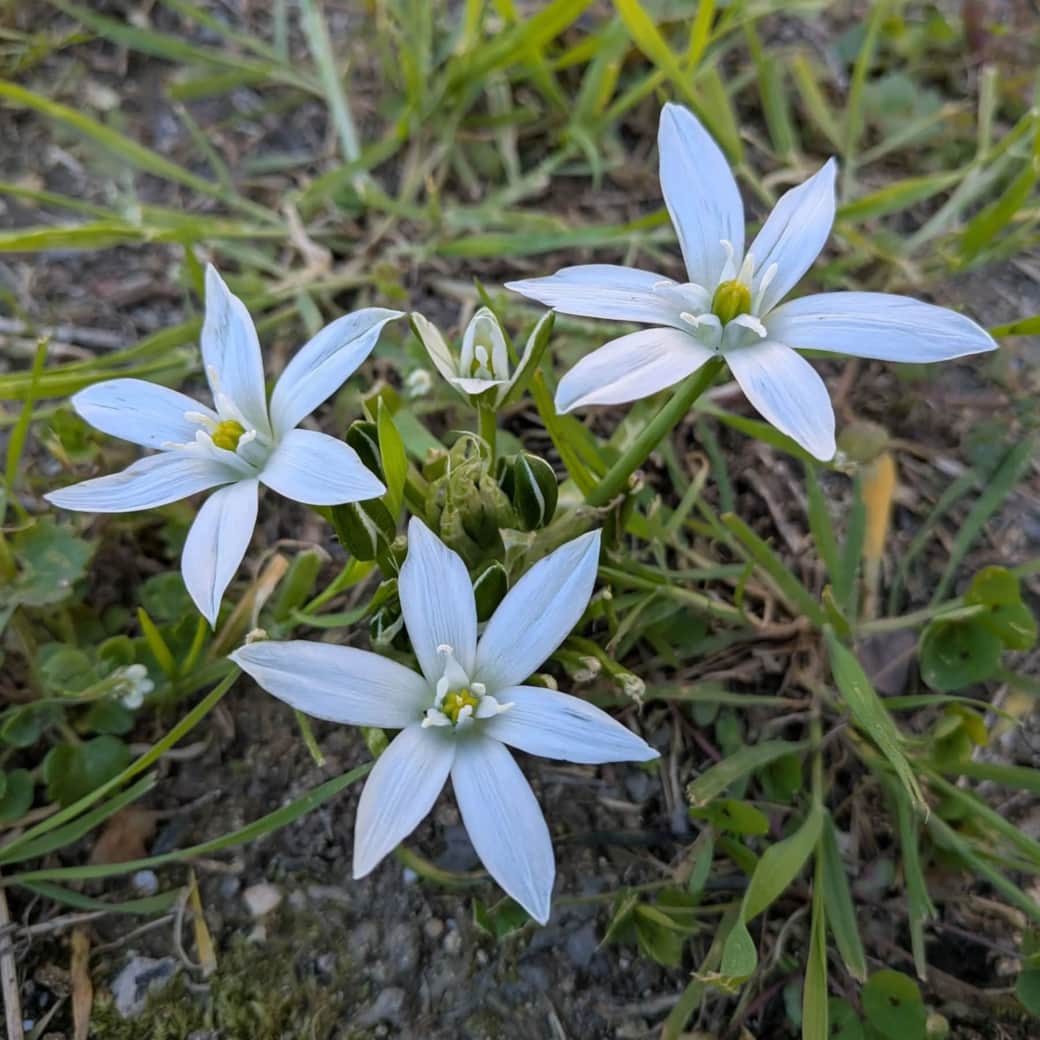
The Umbellate Ornithogalum (Eleven O'Clock Flower)
- Description & Wild Beauty: Like delicate six-pointed stars fallen from the sky, these pure, immaculate white flowers stand out beautifully against the soft grass. The undersides of their petals, subtly streaked with green, along with their fresh yellow-green centers, give them a wild elegance and great refinement.
- Its role in our ecosystem: This spring-blooming bulbous plant serves as a valuable landmark for pollinating insects. Its flowers open wide in response to heat and full sunlight, providing the first midday foragers with direct access to their centers.
- The Eco-Traveler’s Tip: It’s poetically called the “Eleven O’Clock Lady” because its corollas wait patiently for the sun to rise high in the sky before unfurling, then gently close again as evening falls. A true biological clock that invites us to synchronize our rhythm with that of nature at the Villa!
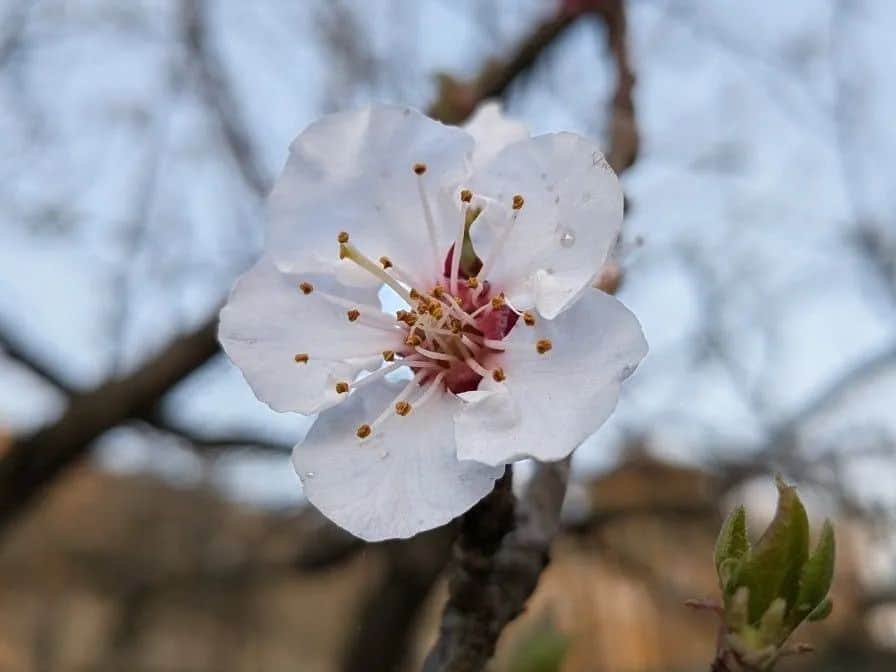
The Apricot Blossom
- Description & Wild Beauty: Standing out against the soft sky of early spring, this silk-white flower reveals a deep rose-red center from which delicate, gold-tipped stamens emerge. Fleeting and precious, it blooms directly on the still-bare wood of the branches, long before the leaves appear, as a symbol of pure rebirth.
- Son rôle dans notre écosystème : Fleurissant dès la fin de l'hiver ou au tout début du printemps, l'abricotier est l'un des premiers arbres fruitiers à offrir sa table aux pollinisateurs. Son nectar et son pollen précoces constituent une ressource de survie vitale pour les reines de bourdons et les premières abeilles qui s'éveillent tout juste d'hibernation.
- A Note from the Eco-Traveler: This delicate flower is the Villa’s first major venture of the year! Highly sensitive to late spring frosts, it embodies the vulnerability and beauty of natural cycles. If the weather is kind, it will reward us in the summer with beautiful apricots bursting with sunshine and the sweetness of the Languedoc.
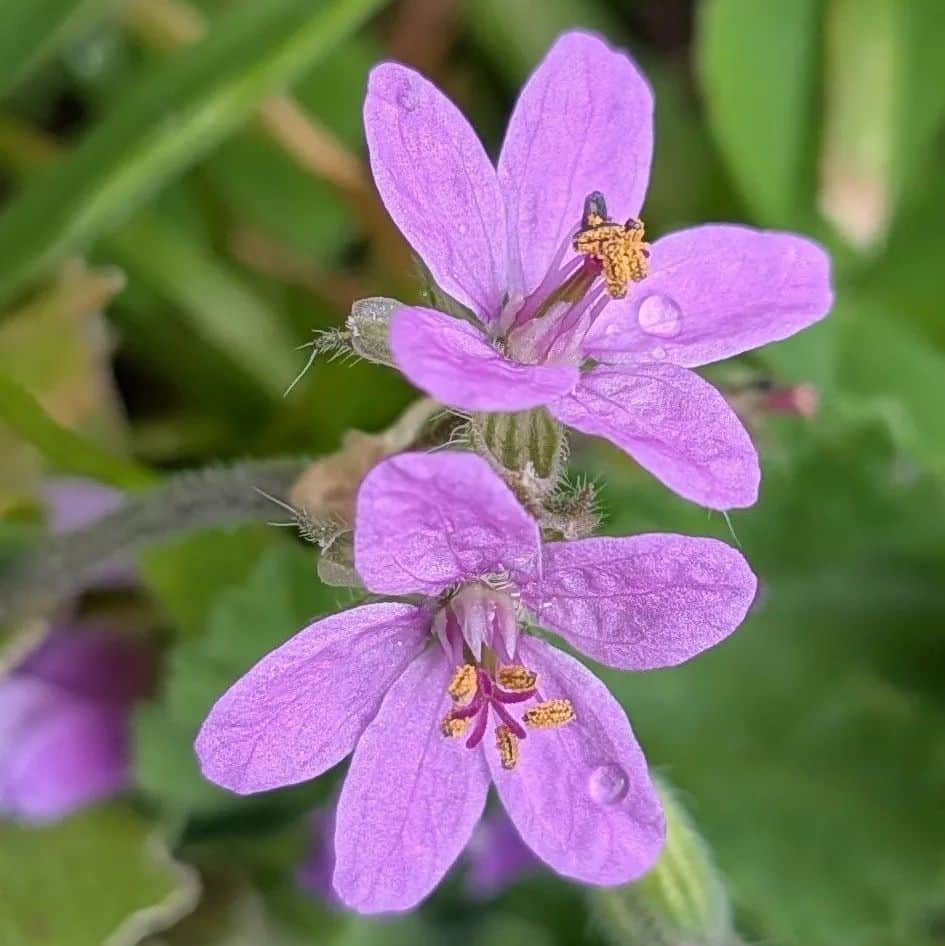
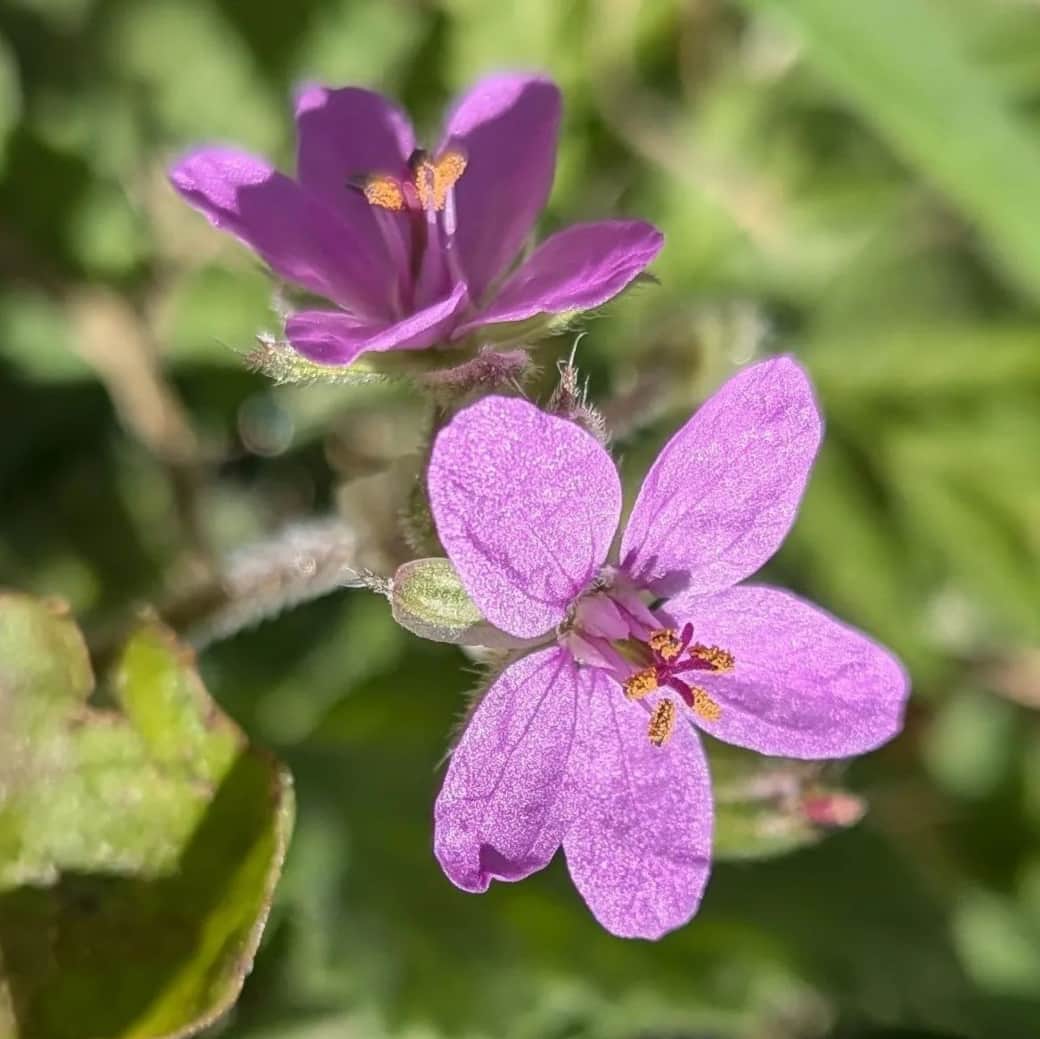
Round-leaved Geranium (or Wild Geranium)
- Description & Wild Beauty: With its small, soft purplish-pink corollas, this humble wildflower discreetly brightens the grassy corners of the garden. Its five delicately veined and slightly notched petals surround stamens laden with golden pollen. Its small, downy, almost round leaves give it an irresistible rustic charm.
- Its role in our ecosystem: This wild plant is an essential component of spring biodiversity. It provides easily accessible nectar to a multitude of small, early-season pollinators, including small solitary bees and hoverflies, which take advantage of its abundant blooms as soon as the first warm days arrive.
- A Tip from the Eco-Traveler: Often mistakenly considered a weed, this native geranium is actually a wonderful natural ground cover. By letting it flourish in the slightly wilder areas of the Villa, we’re fostering a living garden where every little wildflower has its place and its purpose!
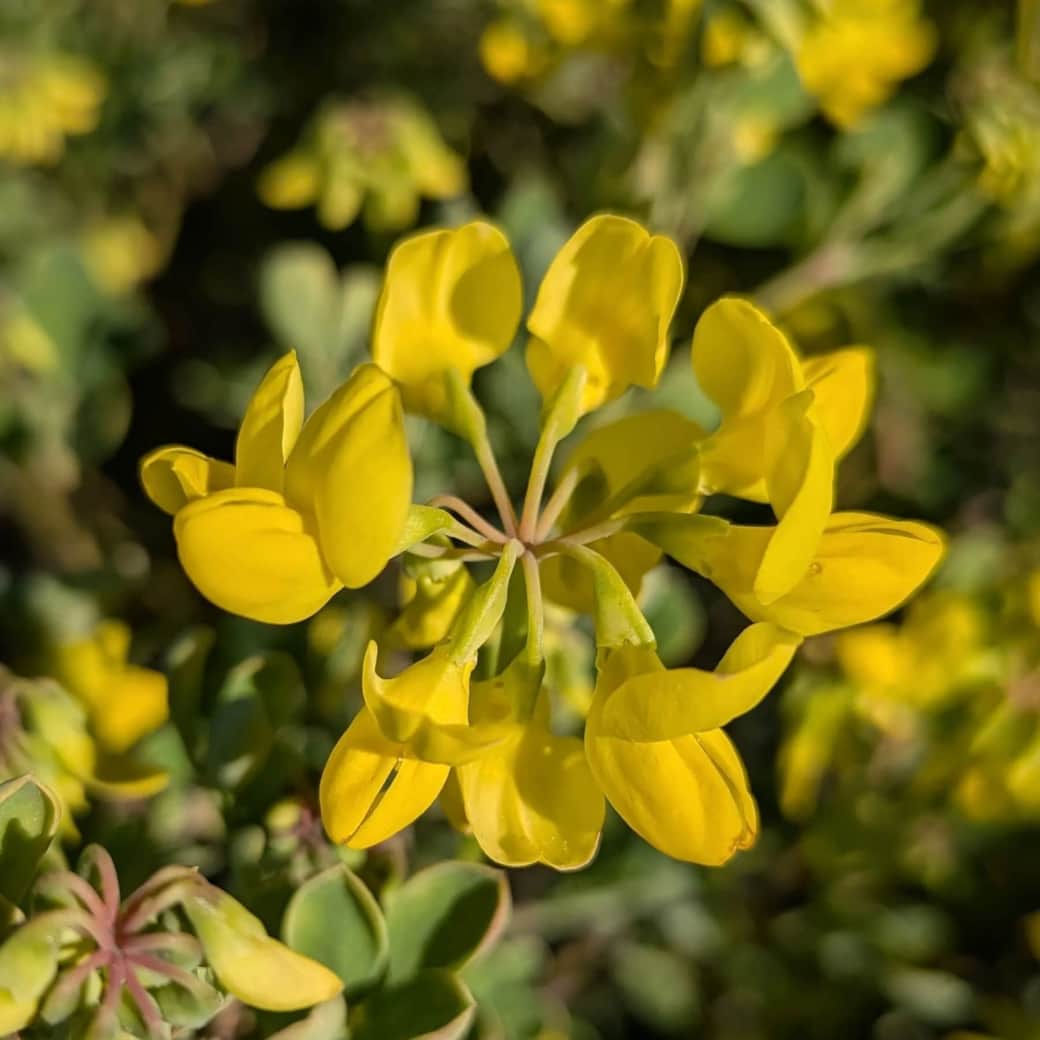
Blue-flowered Crownvetch (or Shrubby Crownvetch)
- Description & Wild Beauty: Arranged in a perfect, airy crown, its small, bright lemon-yellow flowers resemble tiny butterflies gathered in a circle. They contrast beautifully with the very elegant, bluish-green (glaucous) evergreen foliage typical of Mediterranean flora.
- Its role in our ecosystem: This shrub from the Fabaceae family is a boon to biodiversity. Capable of blooming as early as the end of winter, its early and highly fragrant blooms (which give off a sweet scent of peach or melon when exposed to the sun) attract large numbers of the first bees and pollinators in search of essential food.
- The Eco-Traveler’s Tip: The crown vetch is a champion of ecological transition! Not only does it bravely withstand drought without any watering once established, but it also naturally enriches the soil by fixing nitrogen from the air through its roots. A self-sufficient plant that cares for the earth while remaining utterly elegant.
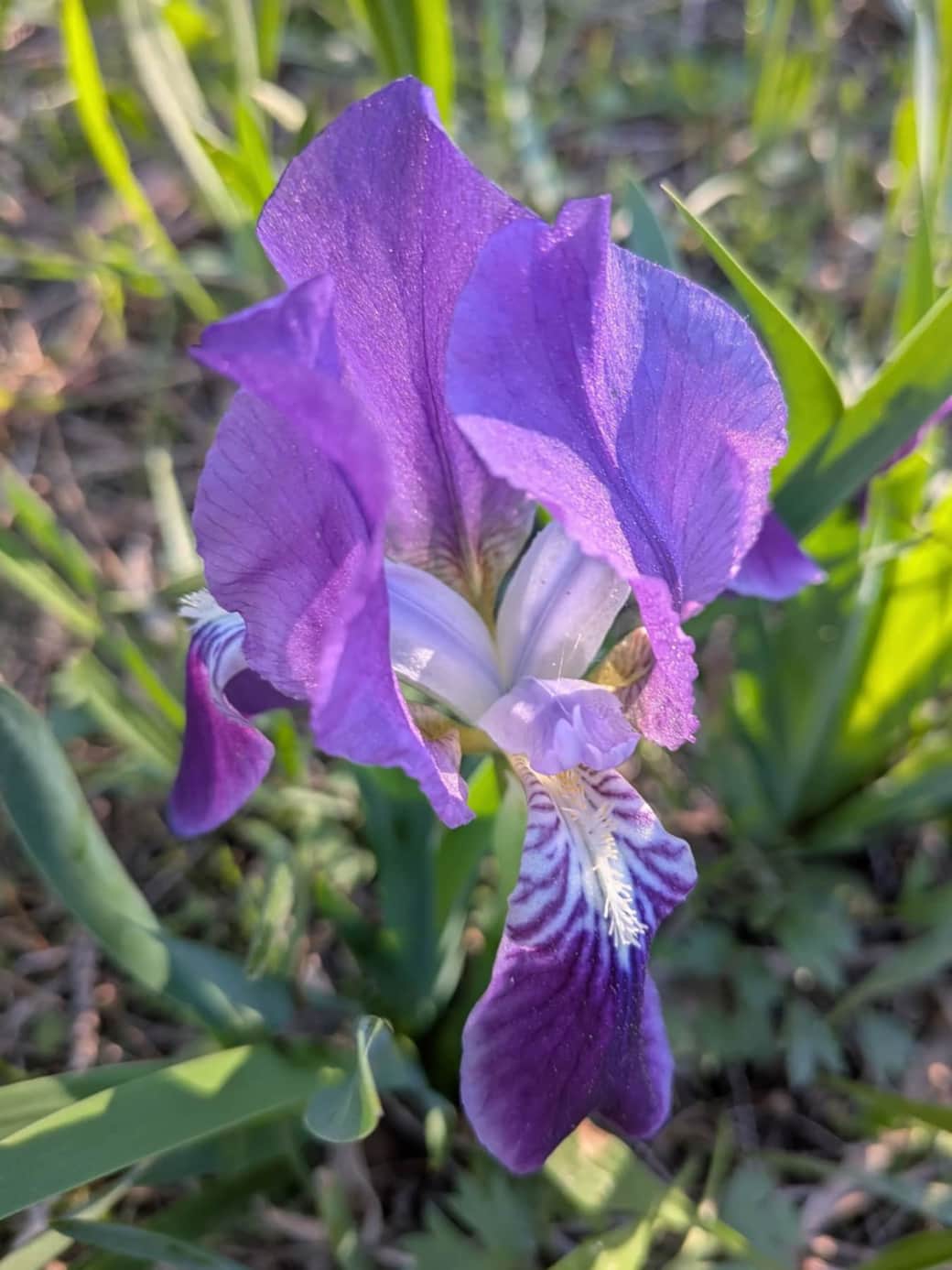
The dwarf iris (garrigue iris), often called Iris lutescens or Iris pumila
- Description & Beauté sauvage : Capturant magnifiquement la lumière rasante du soleil, cet iris nain dévoile des pétales d'un violet pourpre vibrant et velouté. Ses sépales inférieurs se parent de lignes blanches et violettes finement dessinées, surmontées d'une étonnante "barbe" blanche et duveteuse. Une silhouette trapue, sauvage et extrêmement graphique, typique de nos paysages locaux.
- Its role in our ecosystem: Unlike large cultivated irises, this wild, low-growing variety is perfectly adapted to open, windy environments. Its famous white “beard” serves as a physical anchor and tactile guide for pollinating insects, helping them efficiently make their way to the heart of the flower to collect the precious pollen.
- The Eco-Traveler’s Tip: It’s the undisputed king of the Mediterranean scrubland! This hardy iris thrives in the rocky, nutrient-poor, very dry, and limestone-rich soils of Valergues. Its presence at the Villa symbolizes our commitment to preserving and celebrating the authentic local flora—the kind that braves the heat with infinite grace.
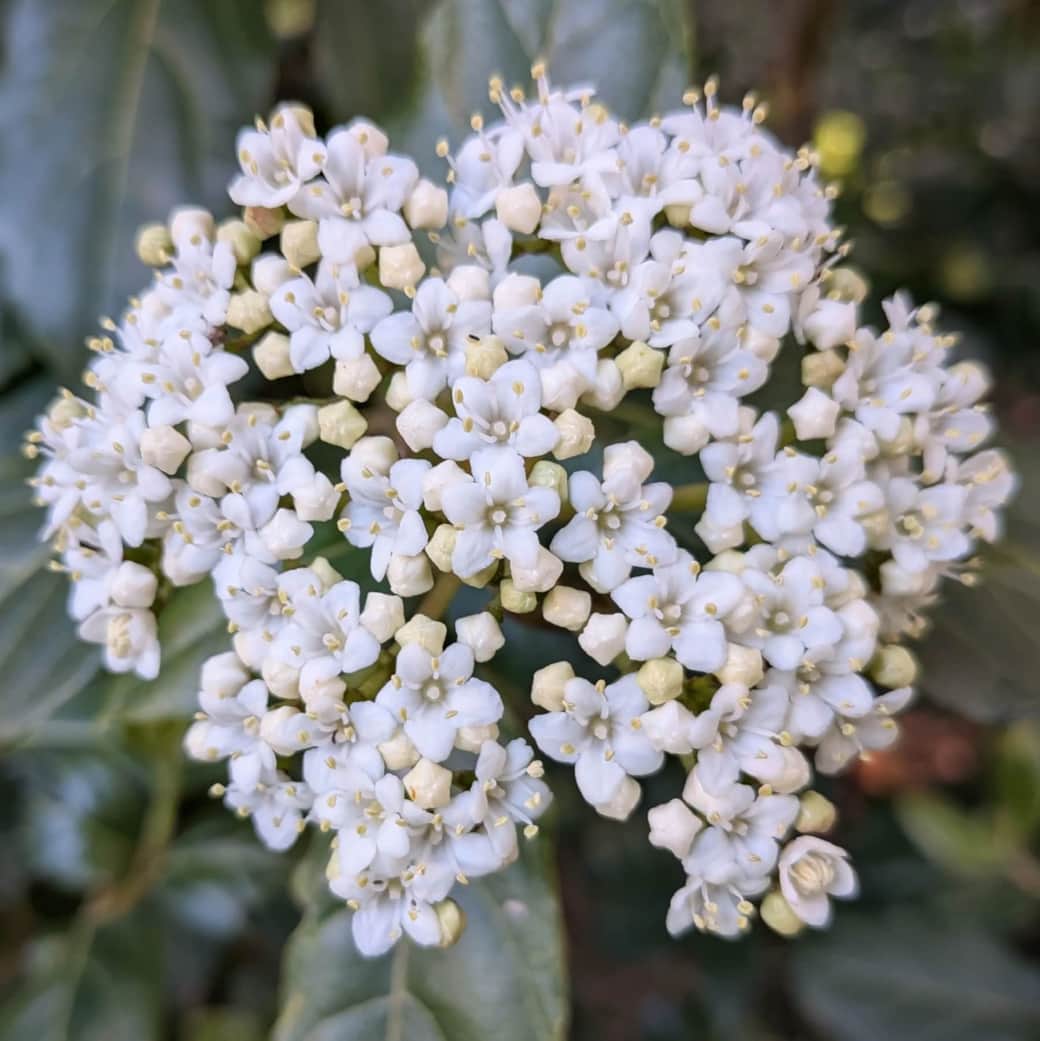
Bay laurel (Laurier-tin)
- Description & Wild Beauty: Tiny, pure-white flowers, resembling small five-pointed stars, cluster in dense, rounded, highly striking bouquets. Their delicate pink buds, still closed, mingle with the fully bloomed flowers to create a gentle contrast of colors against a backdrop of dark green evergreen foliage.
- Its role in our ecosystem: This native shrub is a true pillar of biodiversity throughout the year. Its exceptionally early flowering (which begins as early as winter) provides a vital source of nectar for the first pollinators. In the fall, its flowers give way to small, metallic-blue berries that migrating birds love to eat to replenish their energy.
- The Eco-Traveler’s Tip: A champion of natural, unpruned hedges, the laurel embodies joyful simplicity. It withstands both the wind and the summer drought of the Midi, and requires no watering once established. A quiet strength of our region that remains beautiful, green, and bountiful in every season!
The Spanish Iris (wild / naturalized)
- Description & Wild Beauty: Slenderer, more ethereal, and possessing an utterly wild grace, this iris variety raises its electric-purple petals above the wild grasses. Its lower, more delicate sepals feature an elongated golden-yellow spot edged in white, giving it the appearance of an exotic bird ready to take flight at the slightest breeze.
- Its role in our ecosystem: Blending seamlessly into the wild vegetation, this iris provides an ideal resting spot for solitary wild bees. Its spring bloom comes at just the right time to support insect diversity, as these insects sometimes avoid flower beds that are too structured.
- The Eco-Traveler’s Insight: This is the charm of untamed poetry in its purest form. By letting this iris grow freely among the grasses in the orchard, we create those gentle transitions we love so much at the Villa: where the cultivated garden meets untamed nature.
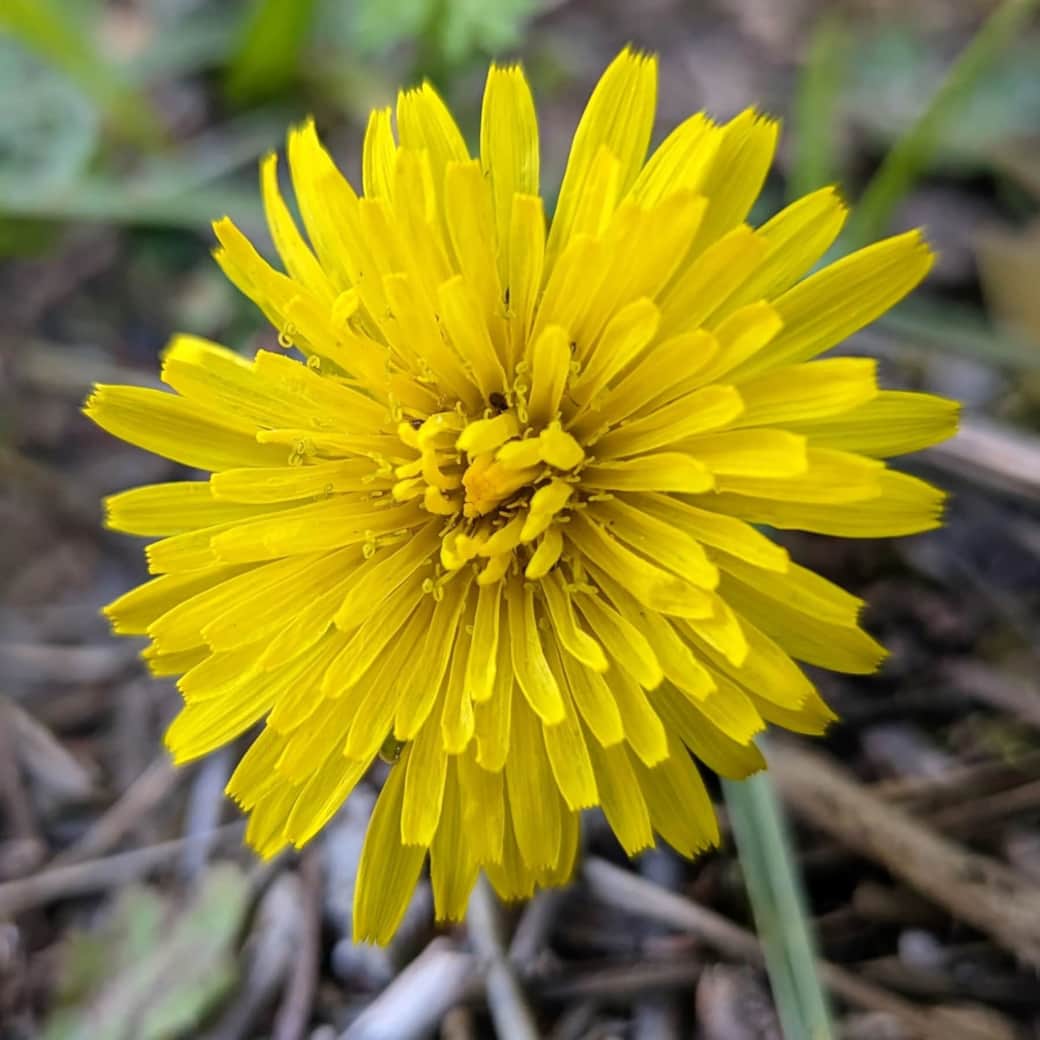
Dandelion (or Lion's Tooth)
- Description & Wild Beauty: A true little ray of spring sunshine resting close to the ground, the dandelion unfurls a dense flower head composed of a multitude of bright golden-yellow ligules. Its petals open wide to capture the full light of day and close faithfully as soon as night or rain threaten.
- Its role in our ecosystem: It is one of the first and most important open-air “restaurants” for biodiversity! Its early and profuse flowering provides an astronomical amount of pollen and nectar to bees, bumblebees, and butterflies just emerging from their winter dormancy. In addition, its powerful taproot helps loosen and aerate heavy soils.
- The Eco-Traveler’s Tip: Long shunned and labeled a “weed,” the dandelion is gaining recognition at the Villa. Every part of it is edible: its young leaves can be enjoyed in a spring salad, its buds can be prepared like capers, and its flowers yield a delicious golden jelly called “cramaillotte.” A bountiful plant that proves the most precious treasures are often right under our feet!
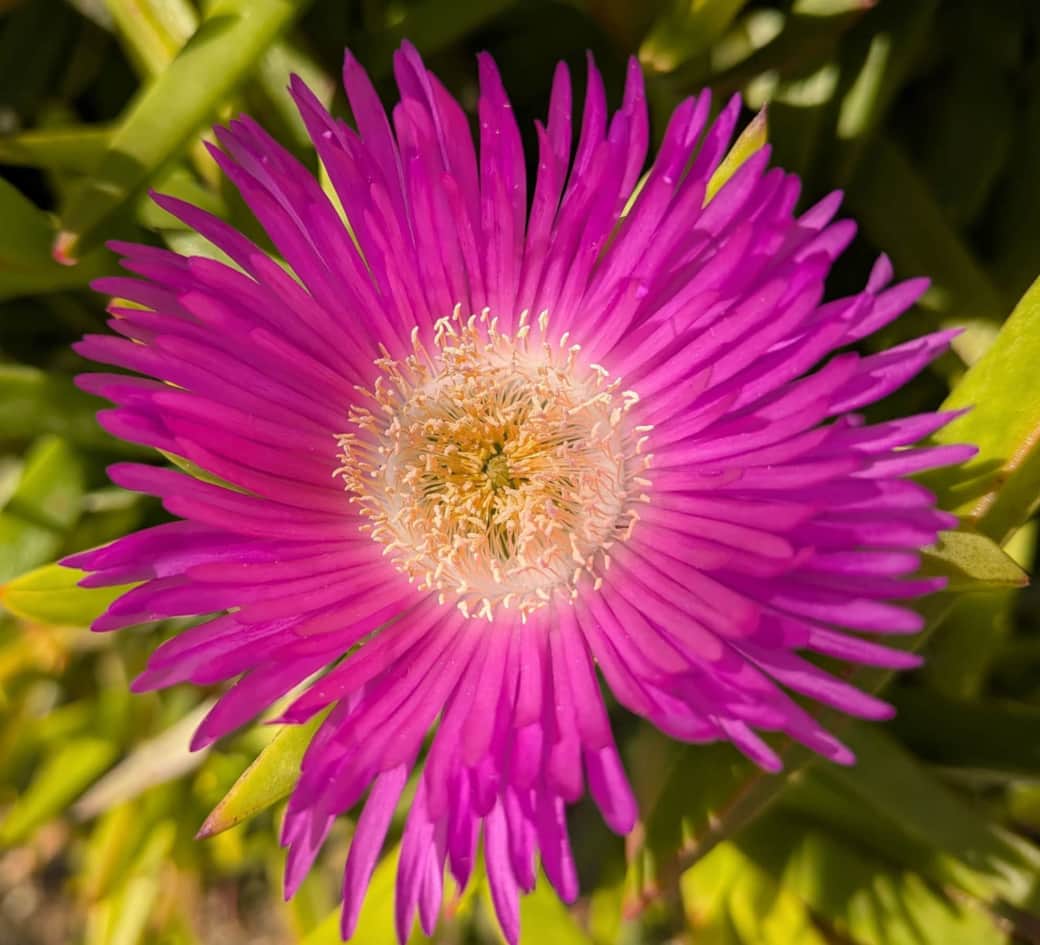
Ficoid (or Witch's Claw / Lampranthus)
- Description & Wild Beauty: A true explosion of color! This flower, with its ultra-vibrant, almost fluorescent magenta-pink hue, unfurls a multitude of delicate, satiny petals that radiate around a center of cream- and golden-yellow stamens. Its green, fleshy, triangular leaves, visible in the background, reveal its succulent nature.
- Its role in our ecosystem: Since its flowers open only when exposed to direct, abundant sunlight, its vibrant corollas serve as an unmistakable visual landmark for bees and hoverflies. Its water-saturated tissues provide excellent ground cover that keeps the soil relatively cool, thereby protecting the microfauna from drying out.
- The Eco-Traveler’s Tip: An absolute champion of drought and salt spray resistance, the ficoid is the queen of rock gardens and arid slopes in the South of France. It carpets the ground without requiring a single drop of water, showing us that it’s entirely possible to combine incredibly exuberant blooms with exemplary water efficiency!
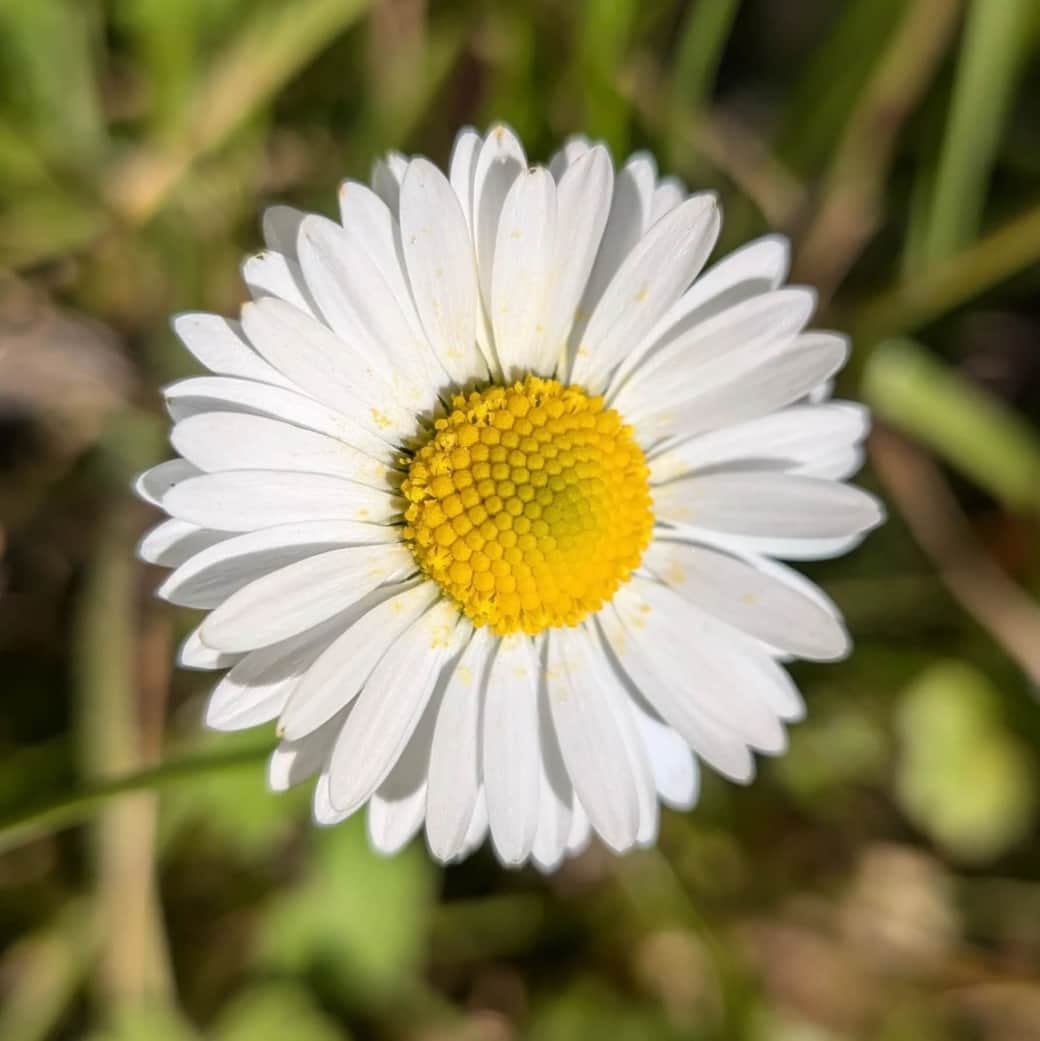
The Daisy
- Description & Wild Beauty: A delicate icon of our lawns, this small wildflower features a center of tiny yellow flowers (the central disk) surrounded by a ruffle of slender white petals, sometimes tinged with a delicate carmine pink at their tips. It patiently turns throughout the day to face the sun.
- Its role in our ecosystem: As the first flower to colonize grassy areas in the spring, it provides an early and easily accessible food source for many small pollinating flies and solitary bees that do not have long proboscis.
- A note from the Eco-Traveler: “Who hasn’t made a daisy chain?” It’s the very essence of childhood poetry. At the Villa, we practice sustainable lawn care: leaving patches of grass uncut allows these adorable little stars to bloom, delighting the eyes… and the insects!
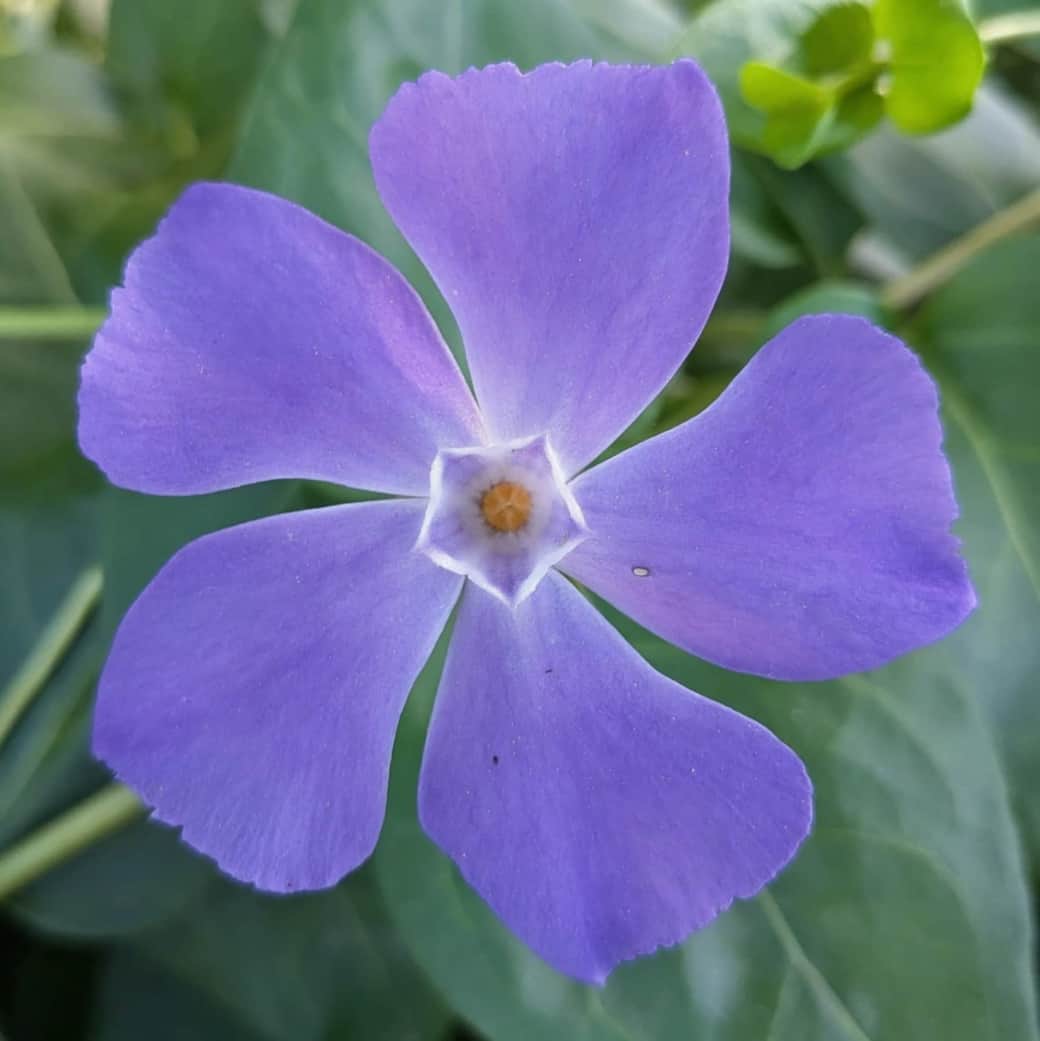
Common Periwinkle (Vinca major)
- Description & Wild Beauty: This flower unfurls five asymmetrical, unique violet-blue petals, forming an almost perfect spiral. At its center, a white calyx forms a small geometric star from which an orange center emerges. The whole stands out against a carpet of evergreen, oval leaves with a glossy green sheen.
- Its role in our ecosystem: Thanks to its dense, creeping foliage, periwinkle makes an excellent ground cover that protects the soil from erosion and retains moisture. Its spring flowers provide a valuable resting spot for the first bumblebees and large butterflies—such as the Lemon Butterfly—which are able to reach the nectar at the bottom of its flower tube.
- The Eco-Traveler’s Tip: It’s the queen of the Villa’s woodlands and shaded areas! Extremely hardy and able to thrive where few others dare to go, it brings a touch of wild poetry and freshness beneath the canopy of tall trees.
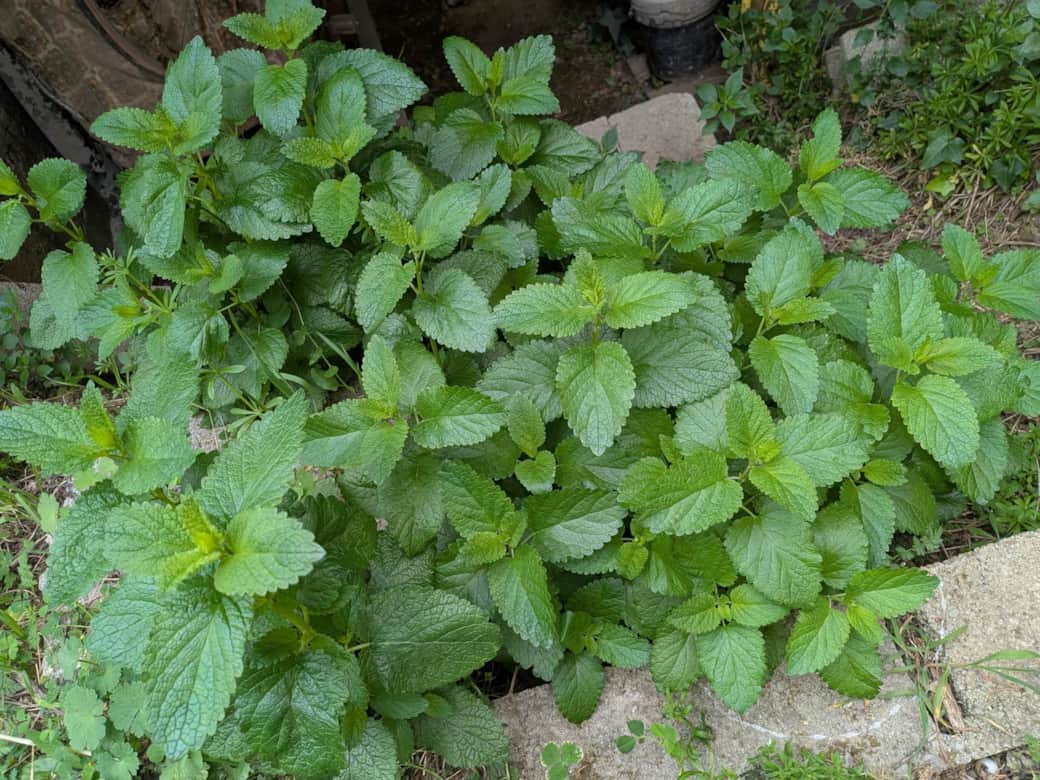
Lemon Balm (or Medicinal Balm)
- Description & Wild Beauty: Forming a particularly vigorous, soft-green bush, this aromatic plant is recognizable by its oval, opposite, and finely serrated leaves, whose embossed surface beautifully catches the light. A gentle brush against its foliage is all it takes for a fresh, intensely lemony, and invigorating fragrance to be released immediately.
- Its role in our ecosystem: Its scientific name, Melissa, comes from the Greek word for “bee”—and that’s no coincidence! Its small, understated white flowers (which appear later in the summer) are exceptionally rich in nectar and attract pollinators by the dozens. In addition, its lemony scent acts as a natural repellent against certain unwanted insects, such as mosquitoes.
- The Eco-Traveler’s Tip: This is the ultimate wellness plant at the Villa! Its fresh leaves are perfect for making delicious, soothing, and digestive herbal teas to enjoy on the terrace at the end of the day, or simply to flavor a pitcher of cold water on hot summer afternoons. Very easy to care for, it thrives in the slightly cooler corners of the garden.
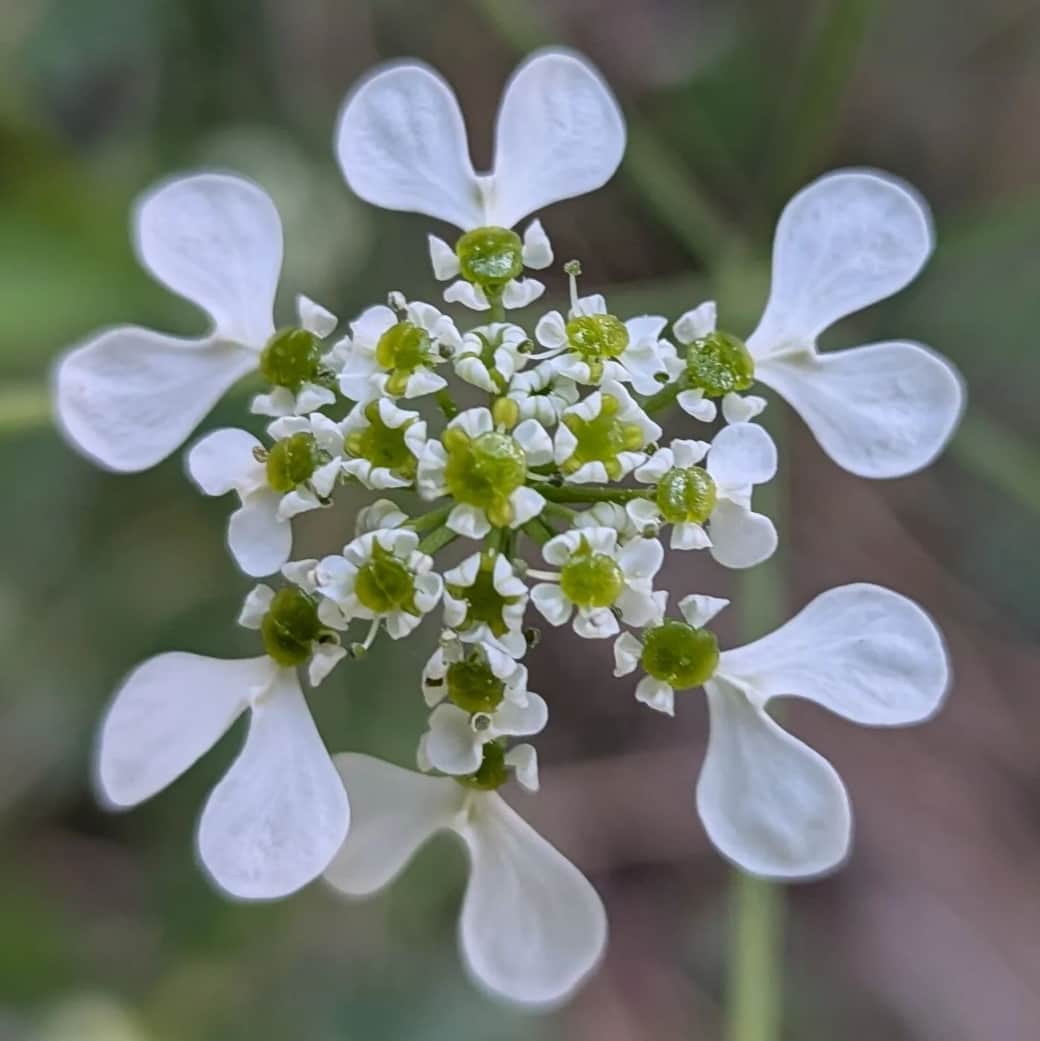
Large-flowered Caucalis (Large-flowered Orlaya)
- Description & Wild Beauty: This incredibly delicate umbellifer features a highly graphic umbel inflorescence. Its outer flowers boast large, deeply bilobed white petals that resemble butterfly wings or small hearts radiating from a soft green and white center. A true botanical lacework of fascinating symmetry.
- Its role in our ecosystem: The orlaya is a blessing for beneficial garden wildlife. Its very flat, open flower heads provide perfect landing pads for insects with short mouthparts, such as hoverflies, lacewings, and small parasitoid wasps, which are formidable natural predators of aphids.
- A Tip from the Eco-Traveler: Typical of the limestone plains and fields in our region, this wild plant adds a touch of poetic lightness to the Villa’s wild grasses. By encouraging its growth, we recreate the spirit of the Mediterranean meadows of yesteryear—naturally elegant and full of life!
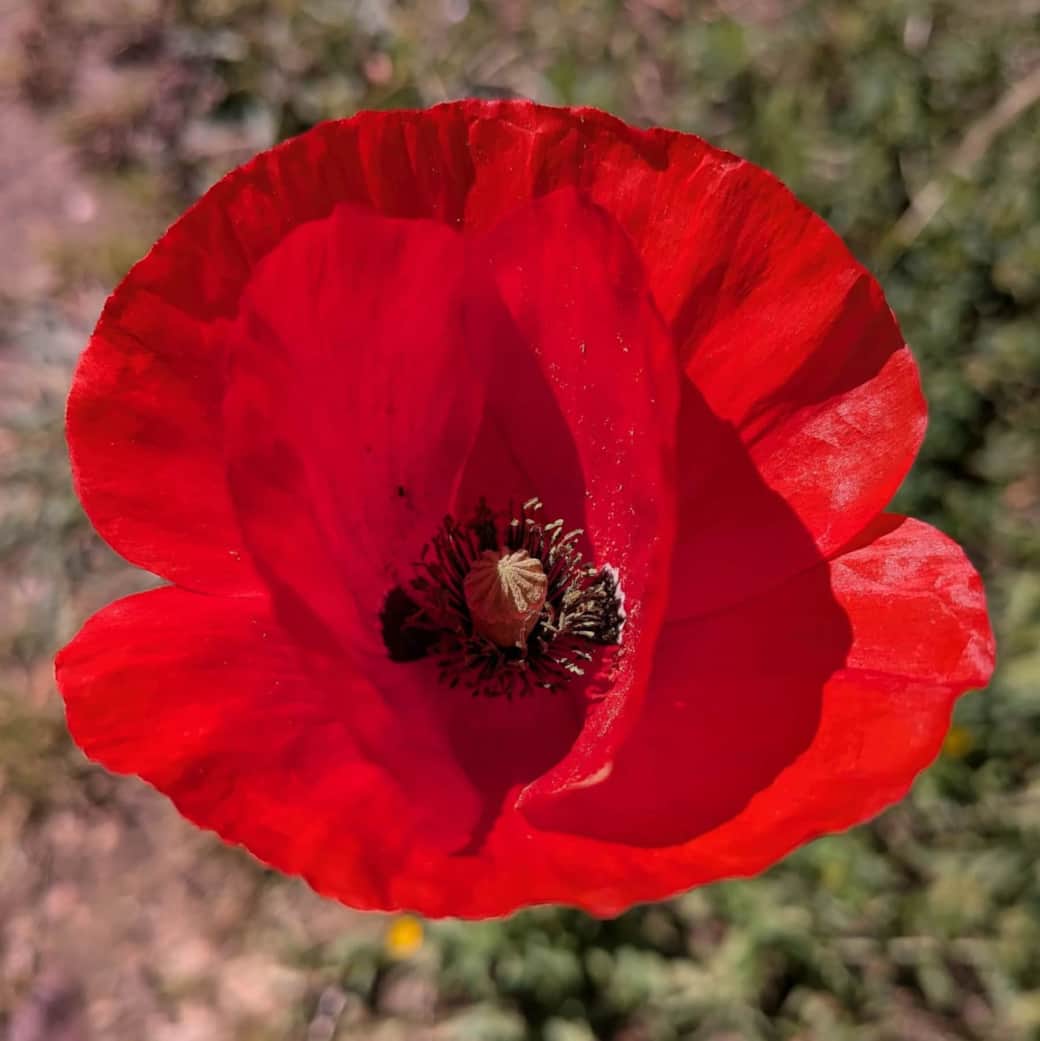
The Poppy (Papaver rhoeas)
- Description & Wild Beauty: A true icon of our countryside, this flower unfurls four vibrant, scarlet-red petals with a crinkled texture as delicate as silk. At its center sits a central capsule surrounded by a ring of dark, almost black stamens dusted with pollen.
- Its role in our ecosystem: Although it does not produce nectar, the poppy provides a generous amount of black pollen that is highly sought after by bees and bumblebees in early summer. It is also a field plant that indicates the good health of untreated soil.
- A Note from the Eco-Traveler: A symbol of freedom and transience, the poppy cannot be picked—it wilts almost instantly. At the Villa, we prefer to admire it where it has chosen to grow, brightening the embankments with a touch of wild, rebellious poetry.
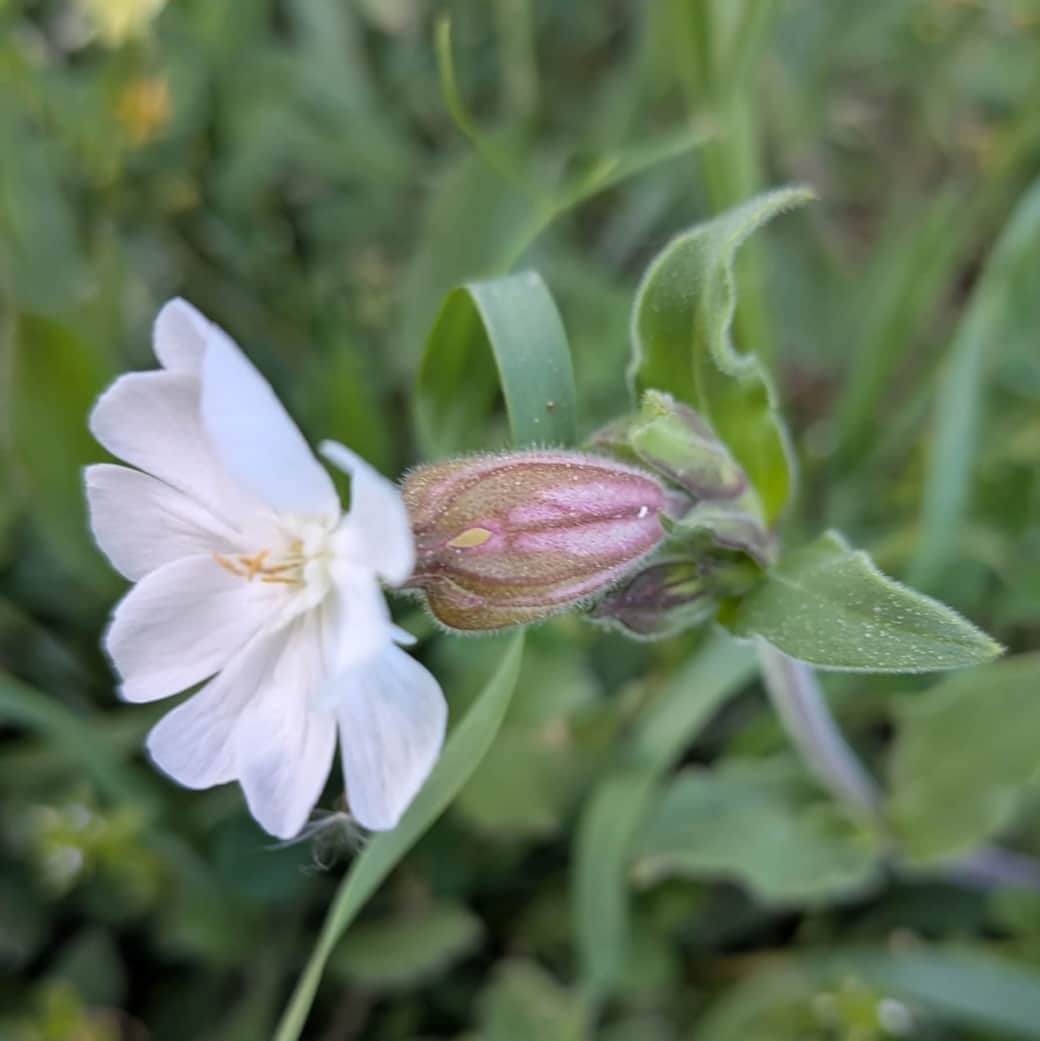
White Campion (Silene latifolia / White Campion)
- Description & Wild Beauty: This elegant wildflower is distinguished by its five pure white petals, deeply notched in the center, which open at the tip of a truly remarkable calyx. This swollen calyx, resembling a small oval balloon, is finely veined with purple lines and covered with tiny glandular hairs.
- Its role in our ecosystem: It’s a fascinating plant that is primarily active at night! Its flowers open fully and give off a sweet, delicate fragrance starting in the late afternoon and throughout the night to attract nocturnal butterflies (such as sphinx moths). During the day, it remains more discreet but continues to offer its nectar to bumblebees capable of piercing or inserting themselves into its calyx.
- The Eco-Traveler’s Tip: It’s called “Compagnon” because it often grows near the red campion (Silene dioica), forming a charming rustic pair along the paths and hedges of the Villa. A poetic plant that reminds us that the garden comes alive and breathes even after the sun has set!
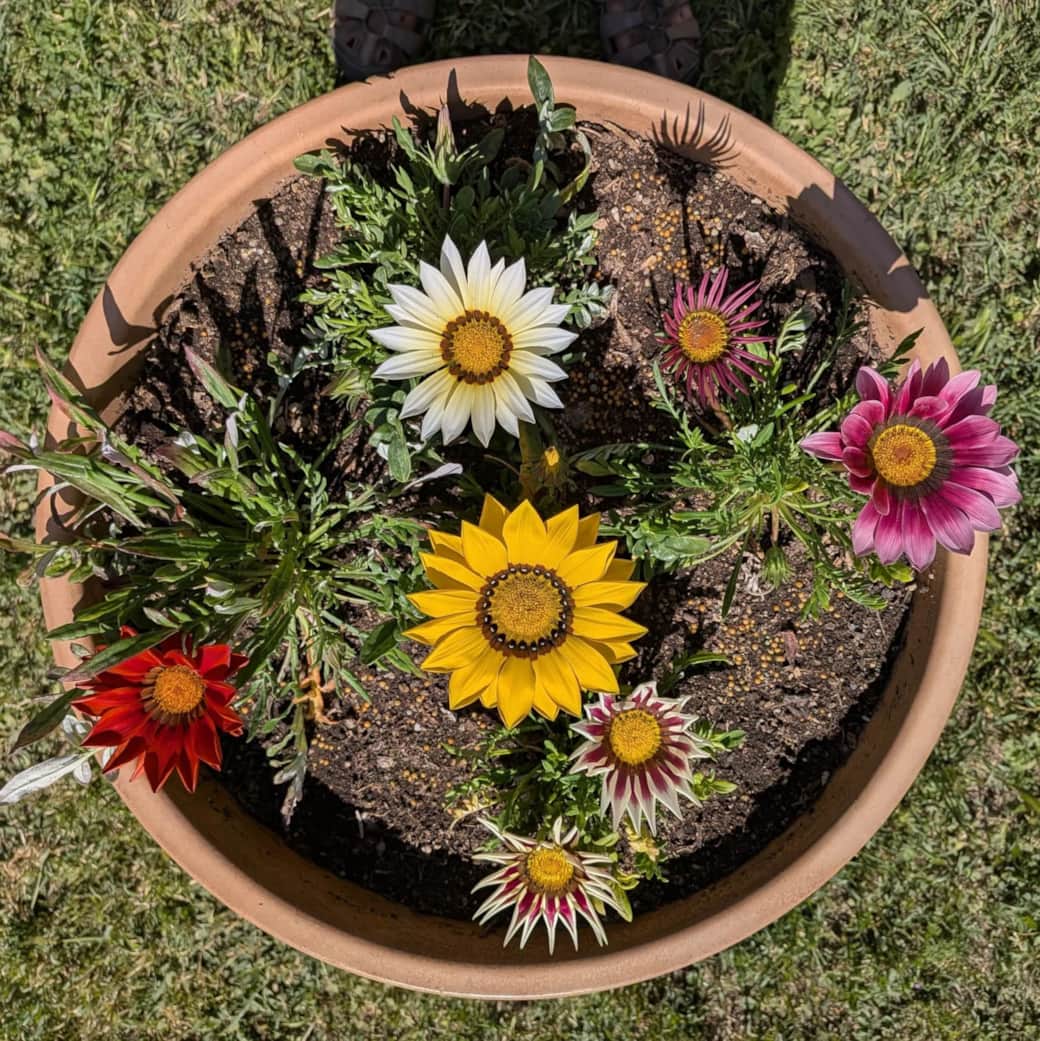
Gazania (Gazania rigens / Cape Treasure)
- Description & Wild Beauty: Planted in a pot, this arrangement offers a dazzling display of colors. The flower heads, shaped like large daisies, come in vibrant golden yellow, pure creamy white, flamboyant brick red, and shades of pink and fuchsia. Each flower features a golden center encircled by a ring of dark, almost black or chocolate-colored spots, which outline the base of each petal with fascinating geometric precision.
- Its role in our ecosystem: Native to South Africa, this plant has adapted wonderfully to our Mediterranean summers. Its abundant blooms and remarkable drought tolerance make it a sustainable resource for bees, bumblebees, and butterflies, which find a constant source of nectar here, even during the hottest part of the season.
- The Eco-Traveler’s Tip: It’s the ultimate sun-loving plant! Just like the eleven o’clock flower, the gazania is extremely sensitive to light: its flower heads open only in bright, direct sunlight, closing modestly as soon as clouds roll in or evening falls. Perfect for adding color to the Villa’s sunny patios with minimal watering!
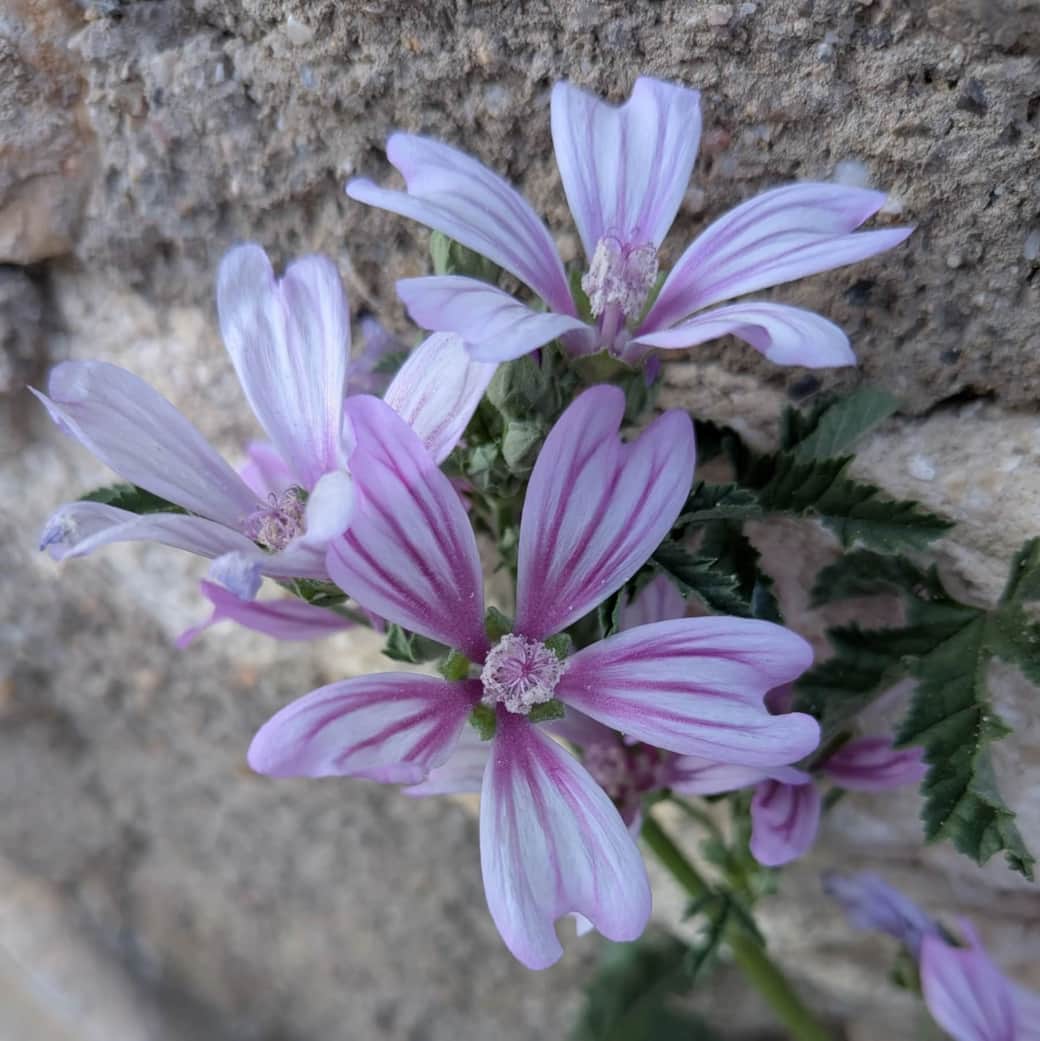
Common Mallow (Malva sylvestris / Great Mallow)
- Description & Wild Beauty: This spectacular flower unfurls five heart-shaped petals in a very soft purplish-pink or mauve hue. Each petal is beautifully accented by three longitudinal stripes of a much darker purple-violet, which converge toward a center of pistils and stamens fused into a feathery tube. It grows valiantly here in the cracks of a dry stone wall, displaying a remarkable vitality.
- Its importance in our ecosystem is undeniable. Mallow is an essential host plant for many butterflies, including the Common White, and an abundant source of nectar for bumblebees and wild bees. It is also very hardy and blooms profusely throughout the summer. Its flowers and leaves, rich in mucilage, have been prized since ancient times for their soothing and calming properties when brewed as tea.
- The Eco-Traveler’s Tip: This is rustic elegance at its finest! Able to take root in the poorest soil and the narrowest cracks of the Villa, it softens the austere, mineral quality of our stone walls with its pastel hues and graceful silhouette. A true lesson in adaptability and wild poetry!
Come see this lush natural environment for yourself—as it changes with the seasons—during a stop at the Villa du Verger.
And why not help complete this inventory!